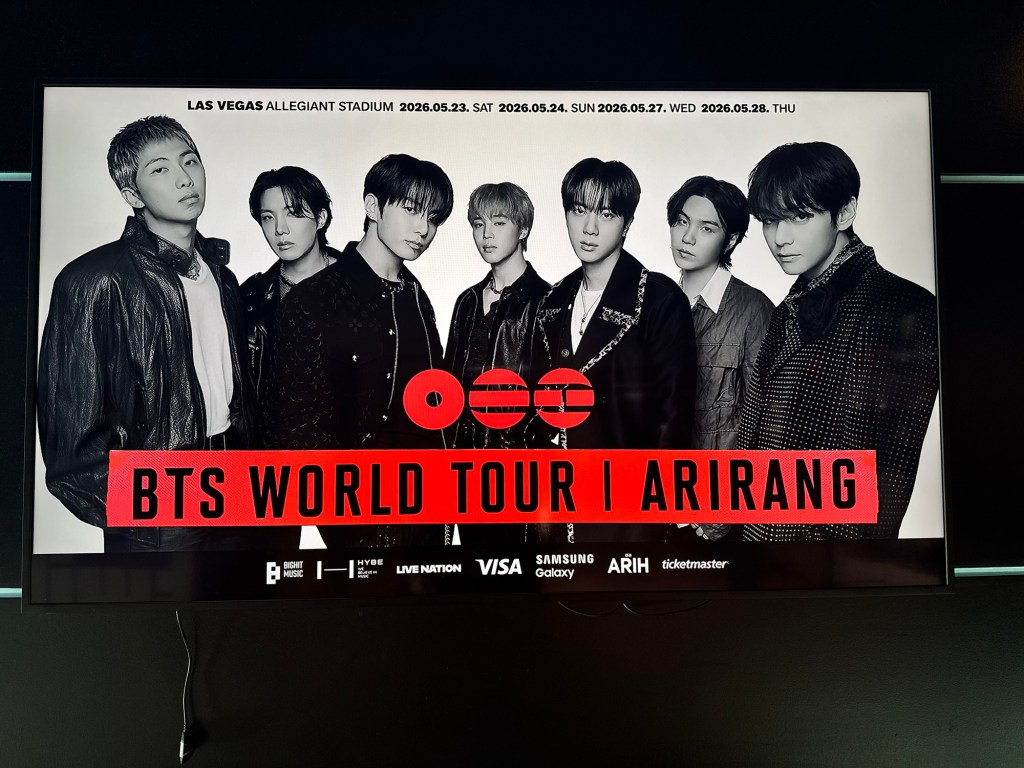
A BTS concert does not feel like attending a concert. A BTS concert feels like your nervous system got strapped to fireworks and launched directly into the atmosphere with 60,000+ strangers yelling the same lyrics at the exact same time. By the end of the night, your Apple Watch thinks you survived a natural disaster, your voice sounds like crushed gravel, and your brain keeps replaying Taehyung turning his head for 1.7 seconds like it was a major historical event. 😭
Science, emotion, music, and human connection are all colliding at once inside that stadium.
“Kerosene, dopamine, chemical induced” suddenly makes perfect sense when you’re standing inside a crowd vibrating from bass so powerful it rattles through your ribs like a second heartbeat. The lights flash. Fire cannons erupt. Fan chants synchronize like military cadence. Anticipation rises before the stage platform lifts. Then one member appears on the screen and the stadium detonates like someone threw a match into gasoline.
Combustion.
Collective emotional combustion.
Proverbs 27:17 says, “As iron sharpens iron, so one person sharpens another.” Human beings affect each other emotionally, physically, and spiritually. Energy spreads through crowds faster than logic. One scream becomes ten. Ten becomes sixty thousand plus. BTS understands this phenomenon with terrifying precision.
Not manipulation.
Understanding.
The Stadium Becomes a Living Organism
The strange thing about BTS concerts is how quickly individuality dissolves into shared experience. Everybody arrives carrying separate lives: jobs, grief, bills, heartbreaks, responsibilities, exhaustion, loneliness, stress. Then the music starts and suddenly the stadium moves like one organism breathing together.
One tiny spark sets everything off:
- Namjoon saying, “Make some noise.”
- Jungkook sprinting across the stage.
- Jin being completely unserious during emotional moments.
- Jimin laughing mid-song.
- Hobi radiating enough energy to power Nevada.
- Yoongi smirking at the crowd.
- Taehyung doing literally anything.
The reaction becomes immediate and physical. The crowd erupts before your brain even processes why. Your nervous system responds first.
Helen Keller once said, “Alone we can do so little; together we can do so much.” That sentence feels scientifically observable inside a BTS stadium. Sixty thousand plus people singing together creates emotional acceleration. Isolation evaporates for a few hours. Strangers hug. People cry during ment speeches beside somebody they met forty minutes earlier in line for merch.
A collective heartbeat forms.
And your brain rewards every second of it.
Dopamine Is Doing Cartwheels
Dopamine often gets simplified into “the happy chemical,” but anticipation actually plays a huge role in the reward system. BTS concerts are anticipation factories.
Your brain gets flooded through:
- countdowns before VCRs end
- surprise songs
- member interactions
- synchronized movement
- visual spectacle
- emotional storytelling
- connection
- unpredictability
- belonging
Every moment becomes another reward loop.
Ecclesiastes 3:4 says there is “a time to weep and a time to laugh, a time to mourn and a time to dance.” BTS concerts somehow cram every one of those emotional states into two and a half hours. One minute the crowd is screaming during explosive choreography. The next minute Namjoon starts speaking softly about life, dreams, or missing ARMY, and suddenly thousands of people look emotionally ambushed.
Then Jin ruins the emotional tension by making a ridiculous face.
Emotional whiplash becomes part of the experience.
Chaos → sincerity → comedy → vulnerability → fireworks → pelvic thrusts → tears → confetti.
Your brain never fully stabilizes long enough to disengage.
The Hotel Room Afterward Feels Unreal
The hardest part sometimes is not the concert.
It’s afterward.
You leave a stadium packed with sound, lights, movement, and collective emotional intensity… then suddenly you’re back inside a cold hotel room hearing the air conditioner hum like a sad office appliance. Your ears are ringing. Your body is exhausted. Your nervous system is still sprinting while the environment has completely stopped. The emotional altitude drops hard.
Which explains why post-concert behavior starts looking extremely specific:
- replaying fancams immediately
- talking nonstop about microscopic details
- rewatching ment translations
- scrolling X/Threads/Instagram/TikTok until 3 a.m.
- staring at confetti like museum artifacts
- planning the next concert before unpacking
My brain is trying to preserve the emotional state before it fades.
C.S. Lewis wrote, “Friendship is born at that moment when one person says to another: What! You too?” BTS concerts create thousands of those moments in a single night. Somebody beside you screams at the exact same member. Somebody cries during the exact same lyric. Somebody understands exactly why a tiny interaction felt enormous.
Suddenly the whole experience feel less strange.
Less alone.
More understood.
BTS Understands Emotional Architecture
Many artists perform songs.
BTS builds emotional architecture.
Every detail matters:
- pacing
- lighting
- crowd interaction
- narrative sequencing
- vulnerability
- choreography placement
- emotional recovery moments
- visual symbolism
- timing of explosions and silence
They understand tension and release better than most filmmakers. Because they are deeply human onstage, the audience responds with even stronger attachment. Polished perfection creates admiration. Humanity creates emotional investment. Watching Jungkook mess around with Jin while Jin playfully throws a punch at Jungkook, or Suga making faces over the guys’s antics onstage makes the experience feel alive instead of manufactured. People connect harder when they recognize humanity underneath excellence.
Romans 12:15 says, “Rejoice with those who rejoice.” That verse suddenly feels very literal inside a BTS stadium where thousands of people celebrate together with zero embarrassment. Joy becomes contagious. Celebration multiplies instead of dividing.
And maybe that explains why ARMY feels less like fandom and more like collective emotional participation.
Soul Insights
1. Human beings are wired for collective emotional experiences.
Modern life isolates people into screens, schedules, and routines that rarely create synchronized emotion. Concerts interrupt that separation. Thousands of people sing, react, move, and feel together simultaneously. The body recognizes shared experience immediately because humans were designed for community long before technology existed. BTS concerts remind people what emotional togetherness feels like in real time.
2. Anticipation can become emotionally addictive.
Much of the emotional intensity comes before the actual moment happens. Waiting for the lights to dim, hearing the opening VCR, or anticipating a favorite member appearing on screen activates excitement before the reward even arrives. The brain begins chasing the emotional climb itself. That cycle explains why fans start planning the next concert almost immediately after the current one ends. Anticipation becomes part of the emotional ecosystem.
3. Vulnerability strengthens audience connection more than perfection.
People remember human moments more than flawless choreography. Fans talk endlessly about laughter, mistakes, teasing, emotional speeches, and unscripted interactions because authenticity creates attachment. Excellence may attract admiration, but emotional openness creates loyalty. BTS succeeds partly because they allow humanity to remain visible beneath performance. Audiences trust people who feel emotionally real.
4. Emotional crashes after meaningful experiences are normal.
The nervous system struggles with rapid transitions from overstimulation to stillness. A massive concert environment floods the senses with movement, sound, connection, and adrenaline. Returning immediately to silence can feel emotionally jarring. Many people interpret the crash as sadness when it is often nervous system recalibration. Recovery becomes part of the emotional cycle after intense joy.
5. Shared joy carries spiritual weight.
Moments of celebration can become deeply restorative for the soul. Laughing, singing, dancing, and feeling emotionally connected with others interrupts emotional numbness that daily life sometimes creates. Shared joy reminds people they are alive, connected, and capable of wonder. God created human beings with emotional capacity for a reason. Joy itself can become a form of gratitude.
Final Thoughts
Maybe that’s why BTS concerts linger in the body long after the lights go out. The experience reaches beyond entertainment. Something deeper happens when thousands of people synchronize emotionally around music, movement, vulnerability, and joy. For a few hours, exhaustion disappears. Loneliness loosens its grip. Complete strangers become emotionally recognizable to one another.
Somewhere between the fire cannons, fan chants, laughter, tears, and bass shaking the stadium floor, the human heart remembers what aliveness feels like.
Not manufactured happiness.
Not distraction.
Connection.
Real connection.
Your Turn
Have you ever experienced a concert, church service, sporting event, or gathering that completely overwhelmed your nervous system emotionally?
What moment made you feel instantly connected to strangers around you?
And why do you think humans keep searching for experiences that make us feel collectively alive?
© 2026 Amelie Chambord


Leave a Reply