By Friday morning, Las Vegas looked hungover. Not dramatically. No overturned slot machines or movie-scene disasters. Just the strange emotional flatness that settles over a city after tens of thousands of people leave at once.
For a week, BTS and ARMY had overtaken the Strip. Purple outfits flooded casino floors. Photocard binders sat beside margaritas. Girls in platform boots sprinted through hotel lobbies carrying light sticks like relay batons. Entire friendships formed in Starbucks lines. Strangers traded concert freebies with the seriousness of diplomats negotiating peace treaties.
Then, overnight, it vanished.
At six in the morning, one of my hotel roommates slipped out for her flight back to Portland while I was still in the bathroom getting ready. Another stayed behind because her flight was not until later that evening. I remember thinking how awful that final day must feel: wandering through the leftovers of a city after the emotional weather has already passed through.
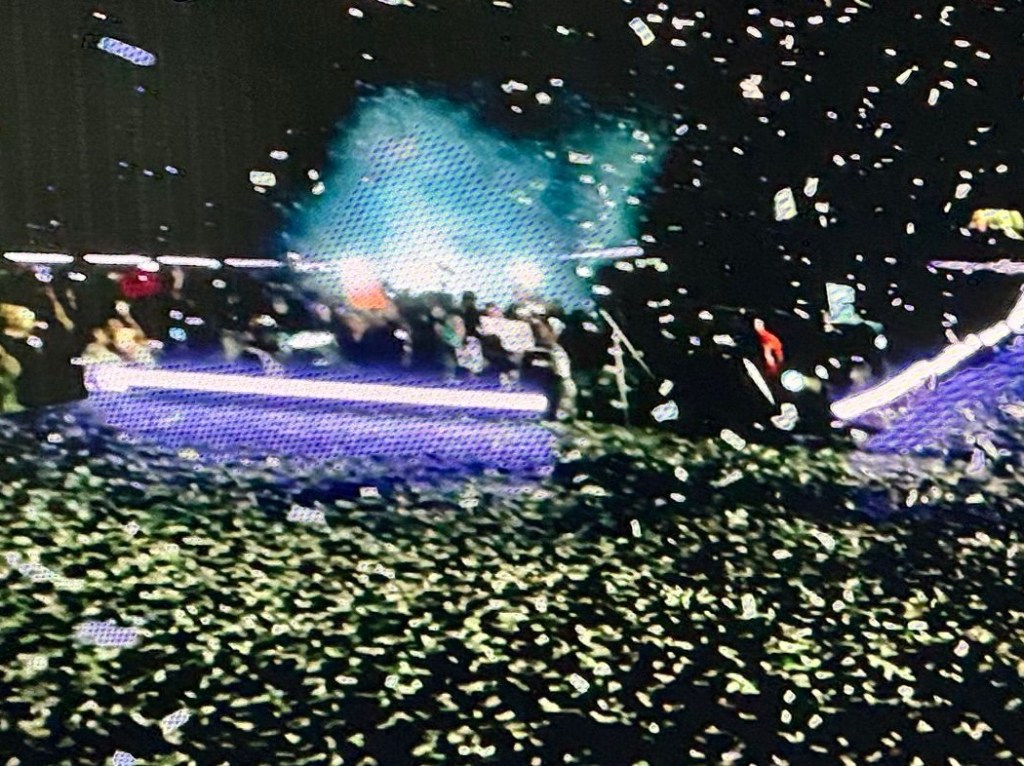
The image that stayed with me all day was confetti after a party.
Not while it is falling. After.
Crushed into carpet.
Swept into corners.
Still colorful, but lifeless now.
Ecclesiastes 3:1 says:
“To everything there is a season, and a time to every purpose under heaven.”
Vegas had entered the next season by sunrise.
The Drive Back
We checked out around seven. Keys dropped into express checkout. Suitcases wedged into the trunk like an aggressive game of luggage Tetris. I climbed into the backseat while everyone moved with the sleepy coordination of people running almost entirely on adrenaline and iced coffee.
About ninety minutes into the drive, we stopped at a Denny’s somewhere between Nevada and California. The restaurant smelled like burnt syrup and overworked coffee machines. Contemporary music played softly through ceiling speakers while exhausted travelers hunched over scrambled eggs as the sun streams through shaded glass windows.
Our table was in post-concert recovery.
We were replaying setlists.
Debating favorite outfits.
Explaining moments that made us cry.
Showing blurry videos no one else could fully appreciate.
We kept circling the same realization without directly saying it: the trip was over now. The version of ourselves that existed inside that week was dissolving mile by mile as we crossed the desert back toward Los Angeles traffic, errands, work schedules, unread emails, and ordinary life.
Joan Didion once wrote:
“Life changes fast. Life changes in the instant.”
What she understood—and what travel often exposes—is how quickly human beings adapt emotionally to temporary worlds. Give people three days in a different environment and they begin believing it is real life. Give them seven, and returning home feels disorienting.
That was the strange thing about Vegas. Even though we traveled together, we each lived inside completely different versions of the same week.
Three days into our Vegas stay, I split off with another friend and stayed at Mandalay Bay where we spent two days enjoying the the amenities and BTS ARMY vibe. We both switched back to Excalibur after two days. I was on my own schedule. While they explored one version of Vegas, I moved through another. Different conversations. Different encounters. Different emotional landmarks.
People think shared experiences create identical memories. They do not.
They create parallel ones.
The Crash After Joy
We barely stopped driving after breakfast. The drivers rotated while I slept against the car window somewhere past Barstow. By the time we reached Sylmar a little after one in the afternoon, the emotional exhaustion finally caught up with me physically.
I noticed my tires needed air before driving back to West L.A. It felt absurdly mundane after a week that had involved stadium lights and thousands of synchronized light sticks. There is nothing glamorous about standing at an air pump in midday heat while your body quietly realizes the emotional event is over.
That is the part nobody photographs.
Not the concert itself.
The aftermath.
I got home around three and sat in my living room staring at the silence. No hotel hallway noise. No group chat coordination. No elevators packed with girls comparing photocards. Just my apartment and the low mechanical hum of the refrigerator.
So I did what emotionally overwhelmed people everywhere do when they do not want to process their feelings directly: I turned on a drama.
The strange thing about joy is that it exhausts the body too. Nobody warns you that happiness can leave you emotionally bruised. We speak fluently about heartbreak, grief, burnout, and disappointment, but almost nobody talks about what happens after enormous joy leaves your nervous system.
Psalm 30:5 says:
“Weeping may endure for a night, but joy cometh in the morning.”
What the verse does not mention is that sometimes joy leaves quietly too. Not tragically. Just gradually. Like hearing concert bass fade as you walk farther away from the stadium.
The Play
By evening, I had one more event scheduled before the day ended: a production of Primary Trust.
The timing felt almost cruel.
The play follows a lonely man navigating adulthood after childhood trauma and emotional isolation. His closest companion for years is an imaginary friend he created to survive loneliness. The story is quiet, restrained, and deeply human in a way that sneaks up on you slowly rather than dramatically.
And sitting there after a week surrounded by overwhelming community, I realized something uncomfortable:
I genuinely do not know what it feels like to have no friends.
Not temporary solitude.
Not needing alone time.
Actual isolation.
The kind where nobody texts you.
Nobody waits for you.
Nobody notices whether you arrived home safely.
That realization unsettled me more than the play itself.
Because fandom had just shown me the opposite extreme. Tens of thousands of strangers singing the same lyrics together. Trading bracelets. Holding doors open. Saving seats. Offering portable chargers to people they would never see again.
One environment amplified belonging.
The other examined emotional abandonment.
Both exposed how badly human beings need connection.
C.S. Lewis wrote:
“Friendship is unnecessary, like philosophy, like art… It has no survival value; rather it is one of those things which give value to survival.”
That line stayed with me on the train ride home.
Because technically, human beings can survive isolation.
But survival and living are not the same thing.
Soul Insights
1. Joy Leaves Debris Behind
People assume emotional crashes only follow grief. That is not true. Sometimes joy expands your inner world so rapidly that ordinary life feels too small when you return. The body slows down before the soul does. That strange emptiness after meaningful experiences is often emotional recalibration, not sadness. Your nervous system is trying to come down from intensity without losing what mattered.
2. Shared Moments Do Not Produce Shared Realities
A group trip is never one story. It is ten private films happening simultaneously in the same location. One person remembers the concert. Another remembers crying in the hotel elevator. Someone else remembers a conversation during breakfast. Emotional memory is deeply selective, which is why nostalgia becomes so personal even inside collective experiences.
3. Spectacle Cannot Sustain the Soul Forever
Vegas excels at stimulation. Lights flash twenty-four hours a day. Casinos are engineered to erase time itself. But the moments I kept replaying were not the loudest ones. They were the quieter exchanges: laughing in the car, recapping the concert at Denny’s, helping each other navigate schedules, checking whether everyone got back safely. Spectacle entertains people. Intimacy nourishes them.
4. Loneliness Often Hides in Plain Sight
Primary Trust reminded me how many adults quietly move through life emotionally unseen. Some become so accustomed to isolation that they stop expecting companionship altogether. Others build elaborate internal worlds because imagination feels safer than vulnerability. The play forced me to recognize friendship not as a social accessory, but as emotional infrastructure. Many people are functioning publicly while starving relationally.
5. Ordinary Life Requires Relearning After Peak Experiences
Coming home after emotionally heightened experiences always feels slightly surreal. You leave environments where every hour feels cinematic and return to laundry, traffic, emails, dishes, and charging your car at a Metro station. But eventually, meaning has to survive outside spectacle. Otherwise, people spend their entire lives chasing peaks while becoming emotionally absent from the valleys where real life actually unfolds.
Romans 12:15 says:
“Rejoice with those who rejoice; mourn with those who mourn.”
Human connection requires both.
Final Thoughts
Tonight, what I remember most is not the concert itself.
It is the silence afterward.
The empty hotel elevators.
The casino carpets scattered with glitter.
The stillness inside the car once everyone got too tired to keep talking.
The strange emotional whiplash of leaving a stadium full of synchronized joy and ending the same day watching a play about loneliness.
That contrast revealed something important.
People are constantly moving between belonging and isolation, noise and silence, spectacle and intimacy. Most of us are far more emotionally fragile than we appear in public. We spend enormous portions of our lives searching for spaces where we feel visible, understood, welcomed, or emotionally safe.
Sometimes that space is a friendship.
Sometimes it is a concert.
Sometimes it is art.
Sometimes it is simply someone remembering your name.
Maybe that is why the aftermath hits so hard.
Not because the event ended, but because something inside you briefly came alive there.
Your Turn
What experience left emotional confetti on your floor long after it ended?
A concert?
A friendship?
A trip?
A season of your life?
Tell me about the aftermath. The part nobody posts online.
© 2026 Amelie Chambord


Leave a Reply