No Passport Needed
Las Vegas is built to imitate places.
Paris. New York. Venice. Ancient Rome. Medieval castles with slot machines humming underneath fake chandeliers.
Then BTS arrived, and suddenly Vegas became something far stranger: a temporary country built out of people carrying photocards, portable chargers, friendship bracelets, purple tote bags, and emotional loyalty strong enough to cross oceans.
Nobody needed a passport.
Only a ticket.
Or honestly, even less than that.
Just the desire to belong somewhere for a few days.
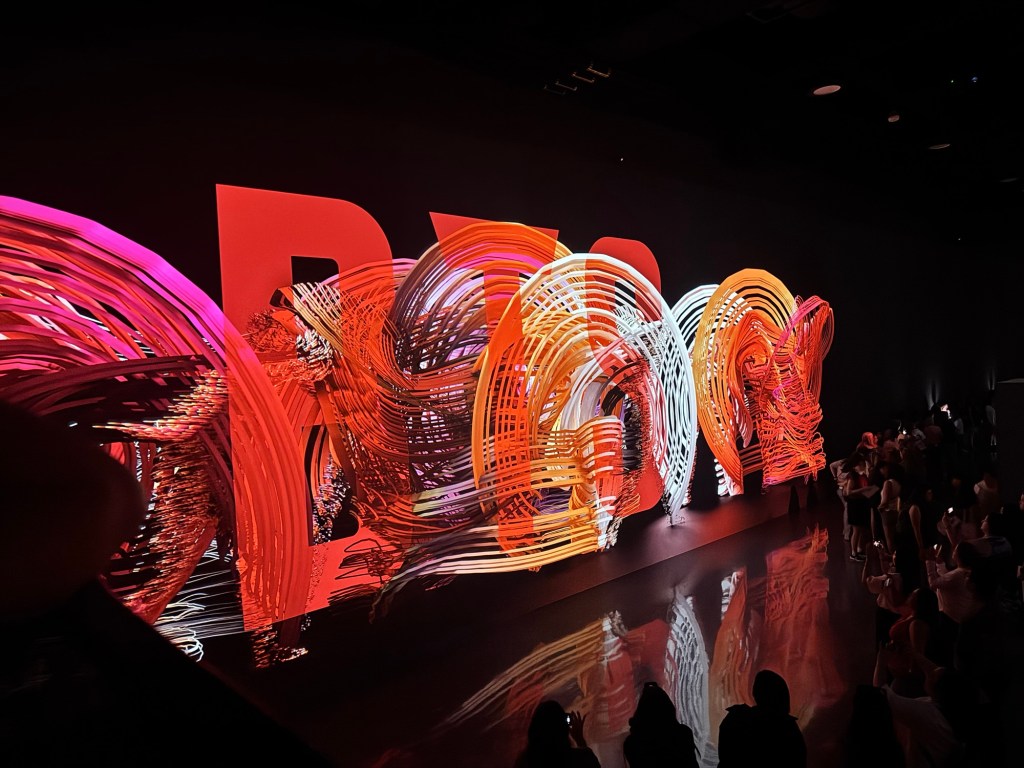
I woke up Tuesday morning exhausted from glute pain and poor sleep, dragging myself out of bed around 7 a.m. because I wanted to be first in line for the immersive art exhibit connected to the Arirang events happening around BTS week. My body was protesting every movement. Still, I got dressed and went anyway because anticipation sometimes outruns discomfort. The human spirit can do incredible things when joy is waiting on the other side of the elevator doors.
By the time I arrived, my friend was already there, saving me from the back of the line. Around us stood strangers who already felt vaguely familiar simply because they were here for the same reason. One woman from the Bay Area started talking with us while we waited. Another woman behind us stayed more guarded but still handed us little freebies. Even the reserved people participated in the ecosystem somehow. That is one of the fascinating things about ARMY spaces. Extroverts adopt introverts for short stretches of time like emotional foster families.
A Room Full of Stars and Shared Reactions
Inside the exhibit, the rooms glowed with immersive projections, animated stars, music, gardens, animals, and interactive installations. One section allowed us to color animals that later appeared digitally on giant walls. Mine looked absolutely unhinged. Purple mane. Red body. Questionable artistic judgment. Somewhere in that digital zoo, my creature looked like it escaped a Lisa Frank fever dream during a BTS comeback season.
And yet I loved every second of it.
Ecclesiastes 3:13 says, “That each of them may eat and drink, and find satisfaction in all their toil, this is the gift of God.” Sometimes joy arrives disguised as childish activities adults pretend they’ve outgrown. Then suddenly you’re forty-something years old, coloring fantasy animals in Las Vegas with strangers from Taiwan while BTS songs echo through an artificial garden. Life gets wonderfully specific sometimes.
The Arirang Garden became one of my favorite spaces in the exhibit. We stayed for nearly forty-five minutes cycling through multiple sessions because nobody wanted to leave. Music floated through the room while projections moved across the walls like living paintings. People barely spoke because everybody was busy feeling the same thing at the same time.
Not performance but participation.
That difference matters.
Author Rebecca Solnit once wrote, “Joy doesn’t betray but sustains activism.” I kept thinking about that while watching people from different countries gather around music, art, and shared affection. Modern life trains people to interact transactionally. Buy something. Scroll something. Perform something. Yet ARMY spaces often operate differently. Fans arrive carrying snacks for strangers, helping people with directions, trading freebies, translating languages, fixing outfits, sharing batteries, and checking whether somebody ate.
Later at the café line, I met a Taiwanese ARMY who had flown into Las Vegas for only one concert night before returning home later that week. Imagine explaining that to somebody unfamiliar with BTS culture.
“You flew across the Pacific Ocean for one evening?”
Yes.
Because the concert itself is only part of the pilgrimage.
The real event is the gathering.
Hebrews 10:24-25 says, “Let us consider how we may spur one another on toward love and good deeds, not giving up meeting together.” Modern society treats gathering as optional now. Everybody lives online, isolated inside personalized algorithms and delivery apps. Yet humans still crave physical proximity. We want evidence that other people feel deeply too.
Vegas looked like proof of that craving.
Inside cafés, hotel lobbies, elevators, casino floors, and restaurants, ARMYs kept finding each other through tiny signals. A photocard hanging from a bag. Purple nails. BT21 keychains. Concert merch. Suddenly complete strangers were exchanging life stories while waiting for Korean barbecue reservations.
Two Hours’ Wait for Korean Barbecue and Nobody Complained
At Hobak, our group waited nearly two hours for a table. Hunger started turning people delirious. One friend nearly fainted because she had barely eaten all day. Still, nobody became hostile. Nobody snapped. Conversations kept expanding instead. New people joined. Friends introduced other friends. Small social circles merged into larger ones like puzzle pieces sliding together temporarily before drifting apart again.
That is the emotional geography of BTS concerts nobody fully explains.
People migrate toward shared meaning.
Writer Pico Iyer once observed, “We travel initially to lose ourselves; and we travel next to find ourselves.” BTS events somehow do both simultaneously. Fans leave home to disappear briefly into a collective experience, then return carrying pieces of themselves they hadn’t located in years.
Even the hotel felt symbolic that night.
After checking into Excalibur and transferring belongings between rooms, I noticed how comforting the new space felt despite being on a lower floor. Bigger room. Couch. Cleaner smell. Tiny forms of stability inside the chaos of Vegas. Outside the window, the city kept roaring. Inside the room, everybody scattered into different adventures. Some friends went to the BTS tailgate gathering while I attended my online class for school.
That contrast almost made me laugh.
One browser tab: higher education.
The other: BTS week in Las Vegas.
Adult life really becomes a bizarre collage after forty.
Still, I think what moved me most Tuesday night was realizing how many people had traveled extraordinary distances simply to feel connected for a few days. East Coast. Bay Area. Taiwan. Different ages. Different languages. Different careers. Same emotional destination.
Romans 12:5 says, “So in Christ we, though many, form one body, and each member belongs to all the others.”
For one temporary stretch of time, Vegas stopped being Vegas.
It became ARMY.
A floating country with no borders except affection.
And honestly?
A lot of modern nations could learn something from that.
Soul Insight
1. People Still Hunger for Collective Experiences
Modern culture keeps pushing independence as the highest form of adulthood, yet humans remain deeply communal creatures. That truth becomes obvious at BTS gatherings where strangers immediately begin helping one another without being asked. Fans share chargers, snacks, directions, tissues, sunscreen, and emotional reassurance like it’s second nature. Community forms rapidly when people arrive carrying shared emotional language. Loneliness weakens when people feel recognized by others without needing lengthy explanations.
2. Concerts Function Like Modern Pilgrimages
Many people dismiss concerts as entertainment, but certain experiences operate more like spiritual travel. Fans save money for months, cross continents, navigate airports, endure exhaustion, and reorganize schedules simply to participate in something emotionally meaningful. The event itself matters, but the preparation and gathering hold equal weight. Pilgrimages have always involved movement toward shared meaning. BTS concerts simply happen to include light sticks and Korean barbecue afterward.
3. Temporary Communities Can Leave Permanent Marks
Most of the people encountered during BTS week may never appear again in daily life, yet the emotional residue remains. A conversation in line. A shared laugh over terrible coloring skills. Somebody saving your place. Somebody translating instructions. Tiny interactions accumulate into lasting emotional memory because humans remember how people made them feel during transitional moments. Brief encounters can still carry genuine significance.
4. Joy Creates Openness Between Strangers
Notice how quickly people begin talking inside emotionally positive environments. Walls lower. Defensiveness softens. Even reserved individuals slowly participate when the atmosphere feels welcoming instead of competitive. Shared joy changes social behavior faster than forced networking ever could. Vegas during BTS week felt less like tourism and more like collective emotional permission to be openly enthusiastic again.
5. Shared Meaning Makes Large Cities Feel Smaller
Las Vegas usually feels overwhelming with its endless noise, lights, casinos, and movement. During BTS week, the city shrank emotionally because familiar symbols kept appearing everywhere. Purple clothing, concert merchandise, fan chants, and BTS conversations transformed random spaces into recognizable territory. Familiarity reduces emotional distance between strangers. Shared meaning turns enormous cities into neighborhoods temporarily stitched together through affection and recognition.
Final Thoughts
One of the strangest things about adulthood is realizing how rare genuine gathering has become.
People work remotely, stream entertainment alone, scroll separately, eat inside cars, and communicate mostly through screens. Then suddenly thousands of people fly into one city because seven Korean artists created music that made them feel understood years earlier.
And for a few days, everybody remembers how good human connection feels.
Vegas became a temporary country called ARMY.
Population: exhausted, over-caffeinated, emotionally sincere people carrying photocards and searching for Korean food at midnight.
Honestly, I’d visit that country again in a heartbeat.
Your Turn
Have you ever traveled somewhere and realized the destination mattered less than the people gathered there?
What temporary communities have changed you?
When was the last time strangers felt familiar?
© 2026 Amelie Chambord


Leave a Reply