I was supposed to be going to Seoul.
Instead, I watched my friends leave Japan without me.
There are travel problems, and then there are your friends are boarding the plane while you’re standing in an airport wondering what on earth you’re supposed to do now travel problems.
This was the second kind.
At the time, I was temporarily living in Japan with the military, and some friends and I were traveling to Seoul for a conference. Somewhere between our plans and actually leaving the country, I discovered a rather important detail: because I was traveling on a Philippine passport rather than an American one, I needed additional documentation from my military unit authorizing my travel.
Documentation I did not have.
My friends had what they needed.
I didn’t.
And airplanes are remarkably unsympathetic to friendship.
They left.
I stayed.
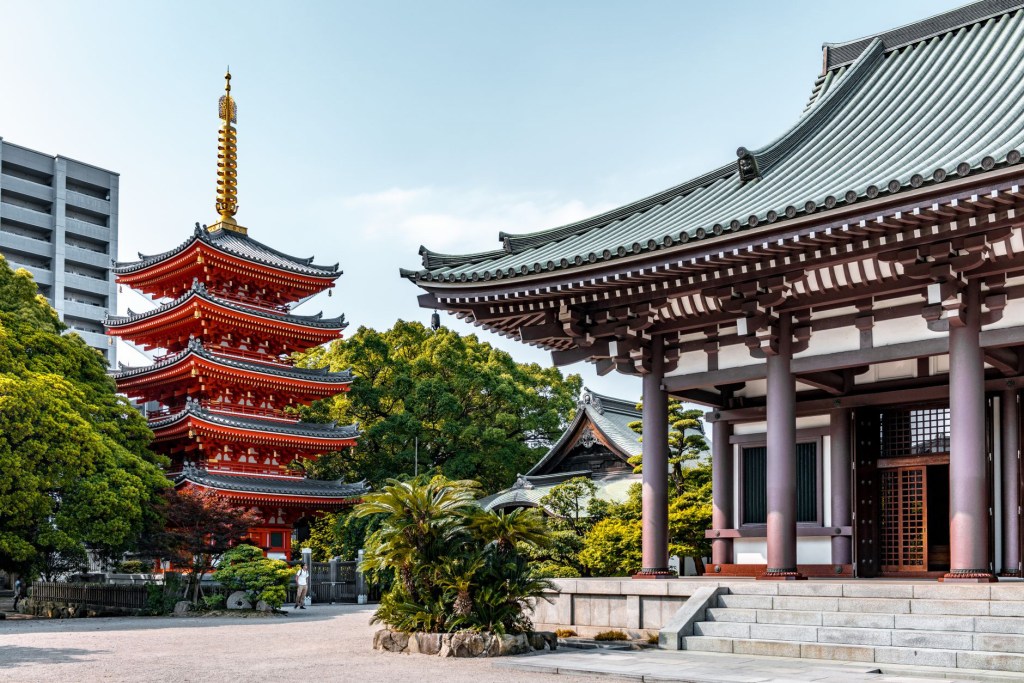
Suddenly, I was alone in Fukuoka.
And I barely spoke Japanese.
Fantastic.
When the Plan Leaves Without You
I wish I could tell you I immediately became some fearless international traveler who calmly assessed the situation and developed Plan B.
Nope.
I was scared.
I was in an unfamiliar city, in a country where I couldn’t communicate easily, trying to figure out paperwork that couldn’t simply materialize because I desperately wanted it to.
The military unit needed to fax the authorization.
Remember fax machines?
There was no pulling up a PDF on my phone, opening an app, or asking someone to email me the document in thirty seconds. I had to wait for people back at the unit to send what I needed.
Except it was after hours.
Which meant I wasn’t going anywhere that night.
So there I was.
No Seoul.
No friends.
No paperwork.
And now I needed somewhere to sleep.
Sometimes life changes direction with absolutely no regard for the itinerary you carefully prepared.
We imagine faith will give us advance notice.
Instead, sometimes faith begins after the departure board changes.
Proverbs 3:5–6 tells us to trust God rather than depending entirely on our own understanding and to acknowledge Him as He directs our path. (Bible Gateway)
That sounds beautiful when you’re reading it comfortably at home.
It feels considerably different when you’re standing in an airport thinking, Okay, Lord. And exactly where is this path going?
One Problem at a Time
I couldn’t solve everything.
But I could solve the next thing.
I needed a hotel.
The airport information desk helped me find one, and somehow I managed to get myself onto a train.
That might not sound particularly heroic now. People travel alone internationally every day.
But courage isn’t measured by whether something would frighten somebody else.
It’s measured by what scares you and whether you move anyway.
I didn’t suddenly stop being afraid.
I just kept going.
As Mark Twain famously put it, “Courage is resistance to fear, mastery of fear, not absence of fear.”
That night taught me exactly that.
Fear can ride along.
It just doesn’t get to hold the map.
Then I Got Lost
Because apparently being stranded wasn’t enough character development for one evening.
I got lost trying to find the hotel.
I didn’t know where I was going. My Japanese wasn’t good enough to comfortably ask detailed directions. This was long before we carried tiny digital navigators everywhere telling us to turn left in 400 feet.
So I did what stranded travelers have probably done since humanity invented roads.
I asked for help.
A stranger didn’t merely point toward my hotel.
He walked me there.
I don’t remember every detail about that person anymore, but I remember the kindness.
And perhaps that’s the detail that matters.
Someone who owed me absolutely nothing saw that I needed help and decided not to leave me wandering.
That moment stayed with me because God’s provision doesn’t always arrive looking dramatic.
Sometimes it looks like an airport employee helping you find a room.
Sometimes it looks like directions.
Sometimes it looks like a stranger walking beside you.
Isaiah 41:10 carries God’s promise that we do not need to be consumed by fear because He is with us, strengthening and helping us. (Bible Gateway)
I used to think being taken care of meant nothing would go wrong.
I’ve lived long enough to know better.
Sometimes being taken care of means something absolutely goes wrong, but help keeps appearing.
The Morning After
The next morning, I retraced my route.
Back to the train.
Back to the airport.
Back to the paperwork.
The authorization finally arrived.
Now I could continue to Seoul.
There was just one more tiny complication.
I was flying standby.
At that point, though, standby felt almost luxurious. After the previous day, I had developed a very sophisticated travel philosophy:
Just get me there.
I had spent the night stranded in a city I hadn’t planned to stay in. I had navigated transportation alone. I had gotten lost. I had depended on strangers. I had survived the whole thing.
Economy?
Middle seat?
Put me next to the bathroom.
I did not care.
Then came the final plot twist.
They put me in first class.
Of course they did.
I went from watching my friends fly away without me to sitting in first class on my way to Seoul.
Apparently God has a sense of humor.
Elizabeth Gilbert once wrote, “Traveling is the great true love of my life.”
I understand that sentiment, but I think one reason I love traveling is slightly different.
Travel keeps introducing me to versions of myself I haven’t met yet.
That night in Fukuoka introduced me to one.
She was scared.
She didn’t know what she was doing.
She needed help.
And she figured it out anyway.
The Part I Understand Differently Now
When I remember Fukuoka, first class isn’t actually the best part of the story.
It’s the funniest part.
The best part happened before I ever boarded that flight.
The best part was discovering that I could be alone without being helpless.
There’s a difference.
For years, I’ve traveled, changed directions, entered unfamiliar places and learned things about myself that comfort could never have taught me.
Fukuoka was one of those classrooms.
There was no lecture.
Just an airport, a missing document, a train, a hotel somewhere I couldn’t find, and one frightened traveler who had to keep moving.
Helen Keller wrote, “Life is either a daring adventure or nothing.”
Adventure sounds romantic afterward.
While you’re living it, sometimes it just feels inconvenient.
Or frightening.
Or lonely.
But some of the stories that eventually become our favorites begin as situations we desperately wish weren’t happening.
Psalm 121:8 says that the Lord watches over our coming and going. (Bible Gateway)
I love that verse differently when I think about travel.
Because apparently “coming and going” includes getting stranded somewhere in between.
Soul Insights
1. You don’t have to feel fearless to be brave.
I was scared in Fukuoka, and that doesn’t diminish what I did. Courage wasn’t some magical feeling that descended on me in the airport. It was buying the train ticket, asking for help, finding somewhere to sleep and getting up the next morning to try again. Sometimes courage is simply refusing to let fear make the next decision.
2. Solve the next problem, not your entire life.
When everything went wrong, I couldn’t solve the whole situation at once. I couldn’t make the paperwork appear, magically transport myself to Seoul or suddenly become fluent in Japanese. But I could figure out where I would sleep that night. When life overwhelms us, sometimes God doesn’t illuminate the entire road. He gives us enough light for the next few feet.
3. Receiving help doesn’t make you incapable.
I needed people that night. The airport staff helped me find accommodations, and a stranger helped me reach my hotel. Independence isn’t proving that you never need another human being. Sometimes maturity is knowing when to stop pretending you have everything handled and simply say, “Can you help me?”
4. God’s provision doesn’t always prevent the problem.
I still got stranded. My friends still left without me. I still had to spend the night in Fukuoka and navigate an unfamiliar place alone. Yet provision kept appearing inside the problem, and that distinction has become important to my faith. God’s presence isn’t proven by a trouble-free life; sometimes we recognize Him most clearly through what meets us along the way.
5. The detour may introduce you to yourself.
Had everything gone according to plan, Fukuoka probably would have been nothing more than a stop on my way to Seoul. Instead, it became a story I’ve carried for years. I learned that fear didn’t automatically mean I was incapable and that unfamiliarity didn’t automatically mean danger. Sometimes the place you never intended to stay becomes the place where you discover you are stronger than you knew.
Final Thoughts
If I could go back and talk to the younger version of myself standing in that airport, I wouldn’t tell her how everything ends.
I wouldn’t tell her about the hotel.
I wouldn’t tell her the paperwork eventually arrives.
I definitely wouldn’t tell her about first class.
I’d probably just tell her:
You’re going to figure out the next thing.
Because that’s what she needed to know.
And maybe that’s what some of us need to know now.
We want God to hand us the itinerary.
Flight number.
Gate.
Departure time.
Seat assignment.
Final destination.
Preferably with confirmation that there will be no delays.
Instead, sometimes He gives us enough grace for the next decision.
And then another.
And another.
Until one day we look backward and realize that what felt like being stranded was actually teaching us how to move forward.
Fukuoka taught me something I wouldn’t fully appreciate until much later:
I can be afraid and still move.
I can be alone and still be okay.
I can get lost and ask for directions.
I can encounter a detour without assuming I’ve reached a dead end.
And God can find me anywhere.
Even when I don’t know where I am.
Even when the plan leaves without me.
Even in Fukuoka.
And occasionally, after all that chaos, He might even throw in first class.
Because apparently the story needed an ending.
And economy simply wasn’t dramatic enough.
Your Turn
Have you ever had a trip, plan or season of life go completely sideways, only to realize later that the detour taught you something you never would have learned from the original plan?
Tell me about it.
And if you’re currently standing in your own metaphorical Fukuoka, unsure what happens next, don’t demand that you understand the entire journey today.
Find the next step.
Take it.
Then trust God with the one after that.
Listen to the podcast here.
© 2026 Amelie Chambord


Leave a Reply