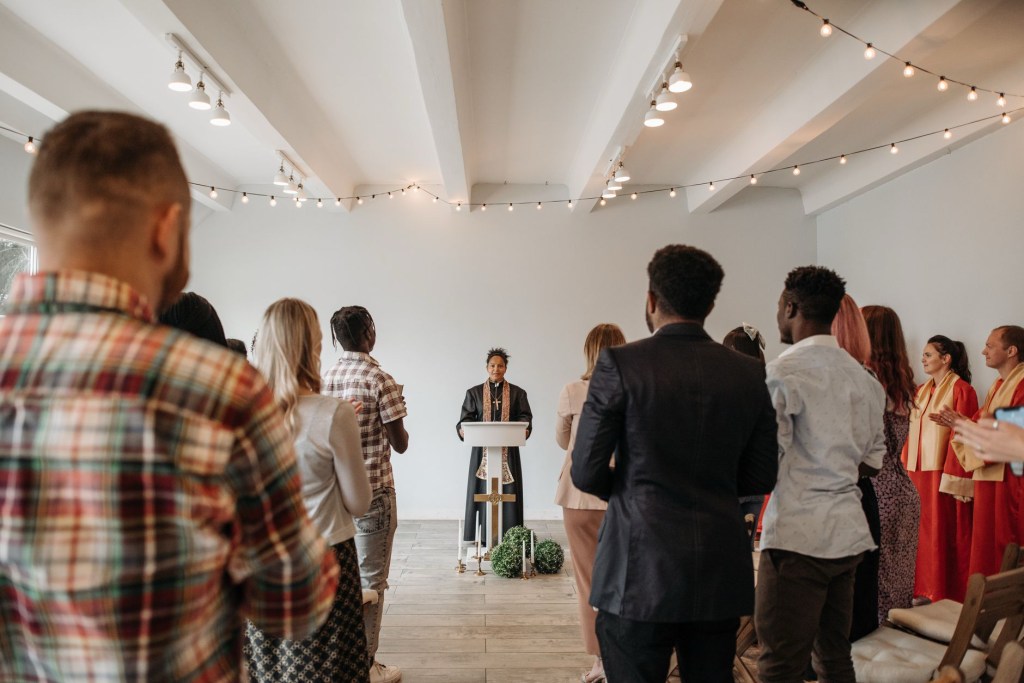
As I sat listening to the sermon, I found myself agreeing with the preacher’s message about ownership and participation.
Being present matters. There is value in showing up, sitting with the community, listening to the message, worshiping together, and being part of the gathering.
But there is another level of belonging that happens when I become involved.
Attendance allows me to experience what others have helped create.
Participation allows me to help create the experience for everyone else.
That distinction stayed with me.
When I take ownership of a project, contribute to an event, or accept responsibility for one part of something larger, my work does not benefit only me. It becomes part of what the entire community receives.
Someone prepares the room.
Someone sets up the equipment.
Someone organizes the program.
Someone welcomes people at the door.
Someone creates the slides, operates the cameras, checks the microphones, arranges the food, teaches the children, or stays afterward to clean.
Each contribution may look small when viewed on its own. But when all those individual acts come together, they create an environment that everyone can enjoy.
The final experience belongs to the whole community, but it exists because individual people decided to participate.
That is what ownership can do.
Showing Up Is Good, but Involvement Adds Value
I do not believe attendance is meaningless.
Sometimes simply arriving requires effort. A person may be tired, discouraged, grieving, overwhelmed, or carrying a private battle no one else can see. Showing up can be an act of faith all by itself.
But when we have the ability and capacity to contribute, involvement adds another layer of meaning.
Instead of only asking, “What will I receive today?” I can also ask, “What can I add?”
That does not mean I have to lead everything.
It does not mean I must accept every request or carry responsibilities beyond my capacity.
Ownership is not the same as overextension.
It simply means recognizing that I have something to offer.
My time may help.
My creativity may help.
My experience may help.
My ability to organize, write, encourage, teach, troubleshoot, listen, or notice what others overlook may help.
When I contribute what I can, I become more than an attendee. I become part of what makes the gathering meaningful for someone else.
“Each of you should use whatever gift you have received to serve others, as faithful stewards of God’s grace in its various forms.”
1 Peter 4:10
This scripture reminds me that gifts are not given only for personal fulfillment. They are entrusted to us so they can move outward.
A gift becomes service when it benefits someone beyond the person who possesses it.
My Contribution Becomes Part of the Whole
I thought about the different projects and events I have participated in.
When I take ownership of one responsibility, I am often focused on completing my part well. I may be thinking about the details, the timing, the presentation, or whether everything will work the way it should.
But my contribution does not remain isolated.
It joins the work of other people.
One person may be responsible for the message.
Another may handle the visuals.
Someone else may coordinate the space.
Another person may make sure guests know where to go.
Each person sees only part of the work, but the community experiences the completed whole.
Paul describes this kind of shared participation through the image of the body:
“Now you are the body of Christ, and each one of you is a part of it.”
1 Corinthians 12:27
A body does not function because every part performs the same role. It functions because each part contributes what it was designed to contribute.
That means my value does not come from doing everything.
It comes from faithfully doing my part.
There are people who can do things I cannot do. There are also areas where my particular skills, perspective, and attentiveness can strengthen the group.
Participation is not competition.
It is contribution.
As Helen Keller said, “Alone we can do so little; together we can do so much.”
The community benefits when people stop measuring whose contribution appears most important and instead begin asking how their different abilities can work together.
Ownership Changes the Way I See Problems
The preacher used the example of owning a home compared with renting one.
When you rent, you often call the landlord when something breaks. When you own the property, the problem becomes your responsibility to address.
That illustration made sense to me.
When I do not feel connected to a project, it is easy to notice what is wrong and assume someone else should fix it.
The sound is not clear.
The program feels disorganized.
The welcome could be warmer.
The visuals need improvement.
The communication is confusing.
It is easy to identify weaknesses from the audience.
Ownership changes the question.
Instead of asking, “Why did nobody handle this?” I begin asking, “Is there something I can do?”
Sometimes the answer will be no. I may not have the authority, expertise, time, or capacity to solve that particular problem.
But sometimes the thing I keep noticing is connected to something I can contribute.
Perhaps I can offer an idea.
Perhaps I can volunteer.
Perhaps I can use a skill I already have.
Perhaps I can connect the right person to the need.
Perhaps I can improve one small part instead of complaining about the entire system.
Booker T. Washington wrote, “If you want to lift yourself up, lift up someone else.”
Contribution has a way of moving us beyond passive dissatisfaction. When I help improve an experience for others, I often become more connected to the purpose behind it.
Participation Creates Belonging
There is a difference between being present in a community and feeling responsible for its well-being.
Attendance says, “I was there.”
Participation says, “Part of me is in this.”
When I contribute to a project, I become invested in its outcome. I care whether people feel welcomed. I care whether the event succeeds. I care whether the message reaches people clearly. I care whether the details support the purpose.
That investment deepens my sense of belonging.
I am no longer standing outside the experience evaluating it.
I am helping carry it.
This may be one reason people often feel more connected after they begin serving. Involvement creates relationships. Shared responsibilities create conversations. Working toward a common goal reveals people’s strengths, personalities, humor, and humanity.
We begin to know one another beyond Sunday greetings.
“Two are better than one, because they have a good return for their labor.”
Ecclesiastes 4:9
The verse does not say that one person’s effort has no value. It reminds us that shared work can produce something greater than isolated effort.
Participation connects my individual contribution to a collective purpose.
That purpose may be a worship service, a ministry event, a community project, or something else that serves people.
Whatever the setting, the principle remains: the whole community benefits when individuals choose to contribute.
I Do Not Have to Do Everything
There is also wisdom in understanding the limits of ownership.
Taking ownership does not mean believing every need is mine to meet.
That mindset can quickly lead to exhaustion, resentment, or an unhealthy belief that nothing will work unless I personally handle it.
True community depends on shared responsibility.
I can own my part without controlling everyone else’s part.
I can contribute without becoming indispensable.
I can help without taking over.
I can serve without neglecting rest, health, or the responsibilities God has already given me.
Mother Teresa once said, “Not all of us can do great things. But we can do small things with great love.”
The point is not to make my contribution look impressive.
The point is to offer it with care.
A small responsibility completed faithfully may provide exactly what the larger project needs.
There is humility in saying, “This is the part I can carry.”
There is also humility in allowing other people to carry theirs.
Soul Insights
1. Presence and Participation Are Both Valuable
Showing up should not be dismissed, especially when a person is going through a difficult season. Sometimes presence is the only contribution someone has the strength to offer, and that presence still matters. But when I have the ability to become involved, participation allows me to add value to the experience of others. The question is not whether attendance is enough, but whether God may be inviting me to move from receiving into contributing.
2. My Part Does Not Have to Be Large to Matter
A community experience is usually built from many small acts that most people never see. A functioning microphone, a prepared room, a thoughtful welcome, or a clear presentation may seem minor, but each supports something larger. I do not have to lead the entire project to make a meaningful difference. Faithfulness in one area can strengthen the work of everyone involved.
3. Ownership Turns Observation Into Responsibility
It is easy to notice what could be improved when I am sitting outside the work. Ownership does not mean I must solve every flaw I see, but it invites me to consider whether I can contribute to the solution. Complaining keeps me at a distance, while responsible action brings me closer to the purpose. Even one practical step can shift me from critic to contributor.
4. Contribution Deepens Connection
When I participate in a project, I become invested in more than the outcome. I begin building relationships with the people carrying the work beside me. Shared service creates a different kind of fellowship because we are not only talking about community; we are creating something together. Belonging often grows when I allow part of my effort, creativity, and care to become woven into the life of the group.
5. Healthy Ownership Respects Capacity
There will always be more needs than one person can meet. I must learn the difference between faithful participation and trying to carry everything. Healthy ownership asks me to contribute intentionally, not endlessly. I can serve with love while still honoring my limits and trusting that God can work through other people too.
Reflection
- Where am I currently attending but not participating?
- What skills or experiences do I have that could benefit my church or community?
- Is there a problem I repeatedly notice that I may be able to help improve?
- Do I tend to underestimate the value of small contributions?
- Have I confused ownership with doing everything myself?
- What is one project, ministry, or person I can support more intentionally?
- How can I contribute without exceeding my emotional, physical, or spiritual capacity?
Final Thoughts
The sermon reminded me that being present is meaningful, but participation allows me to add something of myself to the experience.
When I take ownership of a project, my contribution becomes more than a completed assignment. It joins the efforts of other people and becomes part of something the entire community can receive.
That is the beauty of involvement.
One person’s work can make the gathering smoother.
One person’s kindness can make someone feel welcome.
One person’s creativity can help communicate the message more clearly.
One person’s willingness to serve can lighten the burden for everyone else.
We do not all contribute in the same way, and we should not.
The strength of a community is not found in everyone performing the same task. It is found in people offering their different gifts toward a shared purpose.
Being in attendance allows me to witness what the community has created.
Getting involved allows me to help create it.
And when each person brings what they can, the whole community becomes better because they were willing to participate.
© 2026 Amelie Chambord


Leave a Reply