The Idea
Before there were 20,000 Korean flags inside SoFi Stadium, there was only an idea she could not shake.
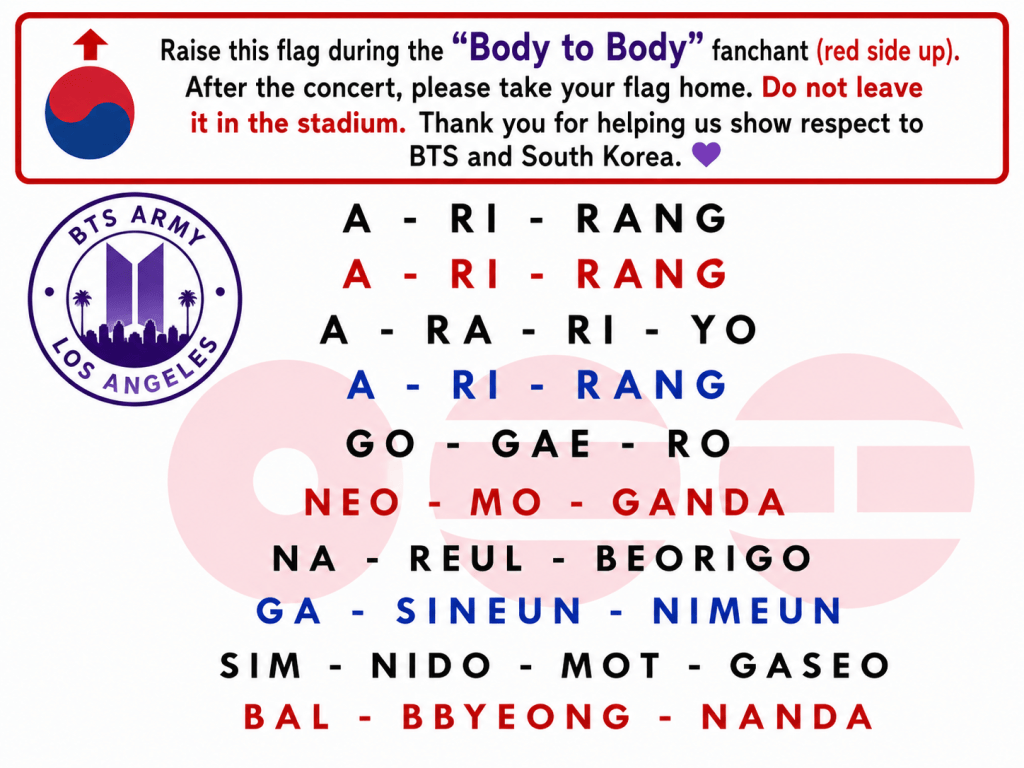
When BTS performed “Arirang,” what if ARMY raised the South Korean flag?
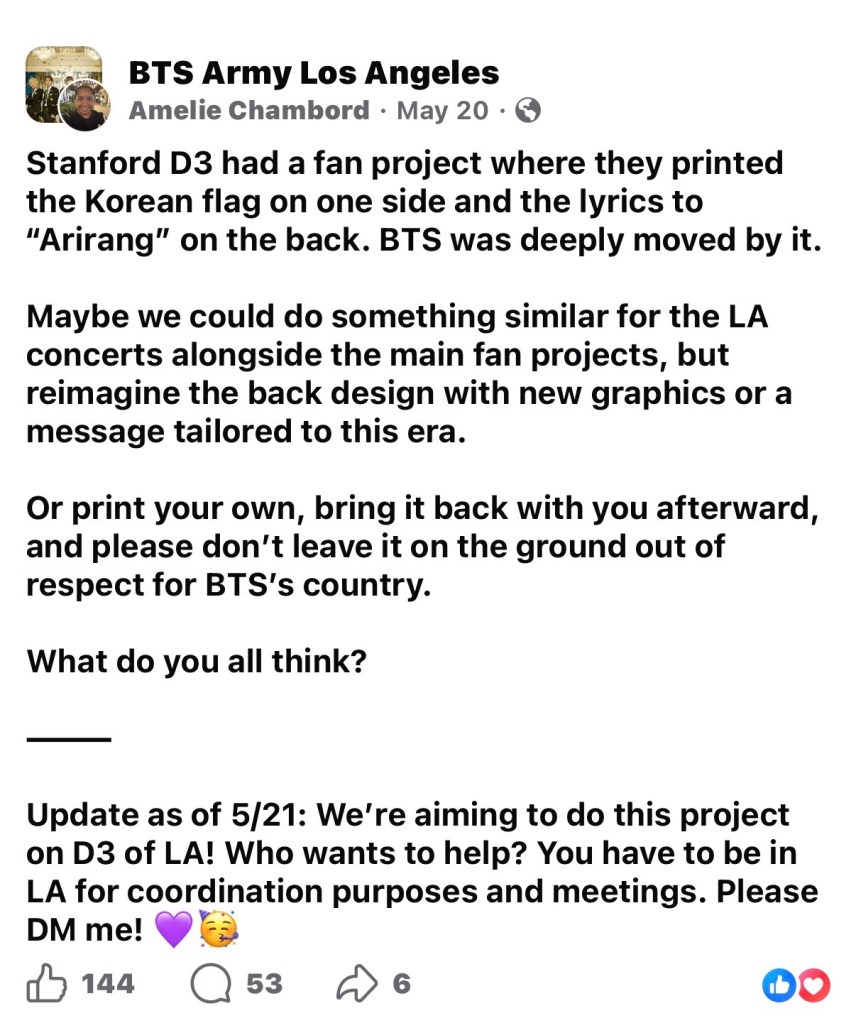
She had already been thinking about it before the Los Angeles concerts. Then she saw that ARMY at Stanford had done something similar.
Watching those flags rise made her think about LA.
BTS had history there. Los Angeles had been part of their journey long before SoFi Stadium, long before the stadium tours, and long before they became one of the biggest music groups in the world.
So she brought the idea to other LA ARMYs.
What if they did it too?
That question became the Korean Flag Project.
At first, the idea sounded simple: print Korean flags, distribute them at the concert, and ask people to raise them during “Arirang.”
It was not simple.
The original goal was 10,000 flags.
Then it became 20,000.
Reaching that number meant finding a printer, raising money, recruiting volunteers, assigning stadium sections, organizing transportation, creating graphics, and making sure people knew when to raise the flags.
She began building the structure around the idea. She brought the team together, facilitated meetings, worked on the materials, designed the back of the flag with the “Arirang” lyrics, helped organize fundraising and social media, and kept the different parts of the project moving.
But the project depended on many people.
Some donated money. Some printed flags at home. Others handled vendor communication, maps, fundraising, social media, logistics, and distribution.
About 20 volunteers eventually joined the effort.
The Work Behind the Moment
For weeks, the project was mostly planning.
There were printing deadlines, fundraising goals, storage questions, volunteer assignments, and constant decisions about how thousands of flags would move through a stadium.
Which sections needed coverage?
How many flags could each volunteer carry?
Where would the boxes be stored?
How would everything get to SoFi?
None of those details would be visible once the concert started, but they determined whether the idea would work.
Eventually, the money came in.
The flags were printed.
Boxes began arriving.
They were counted, divided, packed, and prepared for distribution.
September 5: LA Day 3
Then came September 5.
LA Day 3.
After weeks of meetings, messages, fundraising, printing, and planning, the flags were finally inside SoFi Stadium.
They were in people’s hands.
When “Body to Body” reached the “Arirang” section, the crowd began to sing.
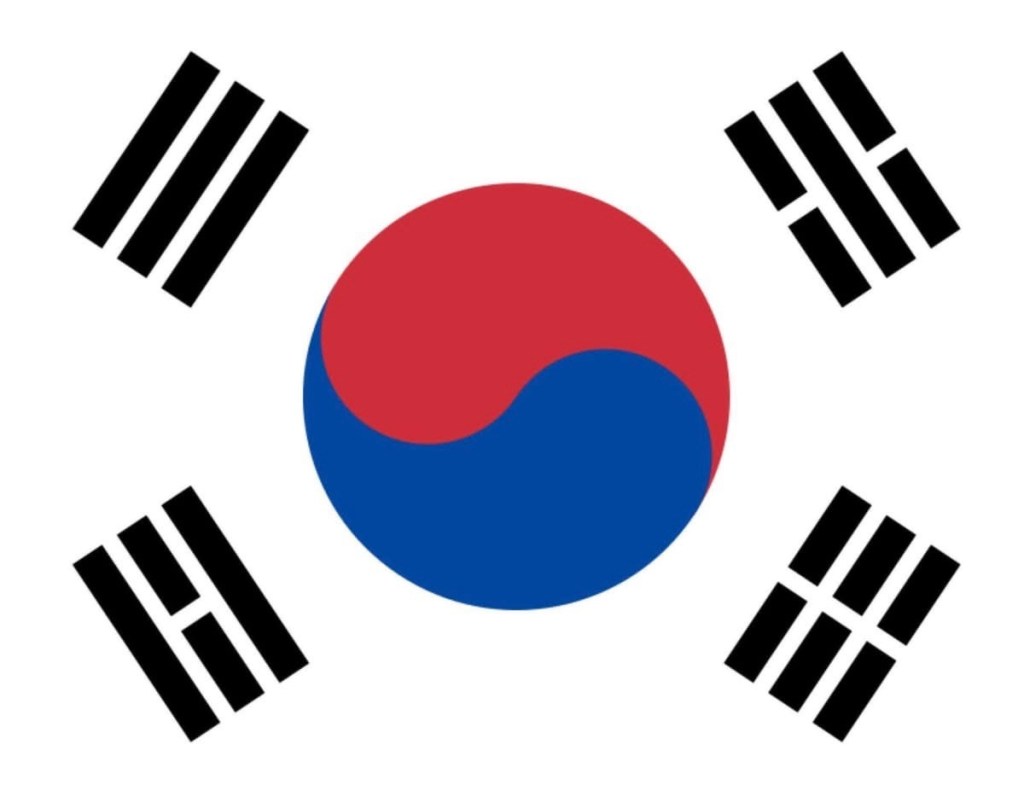
Then the flags went up.
Taegeukgi appeared across the stadium, section after section.
For weeks, she had seen those flags as numbers.
10,000.
20,000.
Printing costs.
Donation totals.
Volunteer assignments.
Boxes.
Deadlines.
Now they were part of the crowd.
Thousands of people were holding the South Korean flag while singing “Arirang” with BTS in Los Angeles.
That was the moment she had imagined when she first brought the idea to LA ARMY.
Seeing it happen was different.
Why the Taegeukgi Mattered
The Korean flag was never meant to be decoration.
It was meant to honor where BTS came from.
BTS had carried their language, culture, and identity with them throughout their career, even as their audience became global. “Arirang” carried its own history, and raising the Taegeukgi during that part of the concert became a way for ARMY to acknowledge that history without trying to claim it.
That distinction mattered. So did the fact that it happened in Los Angeles. LA had known BTS before SoFi.
Years earlier, they had come to the city at a very different point in their career. Now they were standing inside a stadium filled with ARMY.
And throughout that stadium, people from different countries and backgrounds were singing a Korean folk song while raising the Korean flag.
What the Crowd Didn’t See
The moment lasted only a few minutes.
The work behind it took weeks.
The crowd did not see the people printing flags at home, the volunteers carrying boxes, the late messages, the section maps, the fundraising posts, or all the small decisions that had to be made before anyone could raise a single flag.
She did.
That was part of what made the moment matter.
What began as a question had become something thousands of people could see.
One person brought the idea forward.
A team built it.
Volunteers carried it into the stadium.
ARMY lifted it into the air.
And for a few minutes inside SoFi, the image she had once imagined was no longer an idea.
It was everywhere.
© 2026 Amelie Chambord


Leave a comment