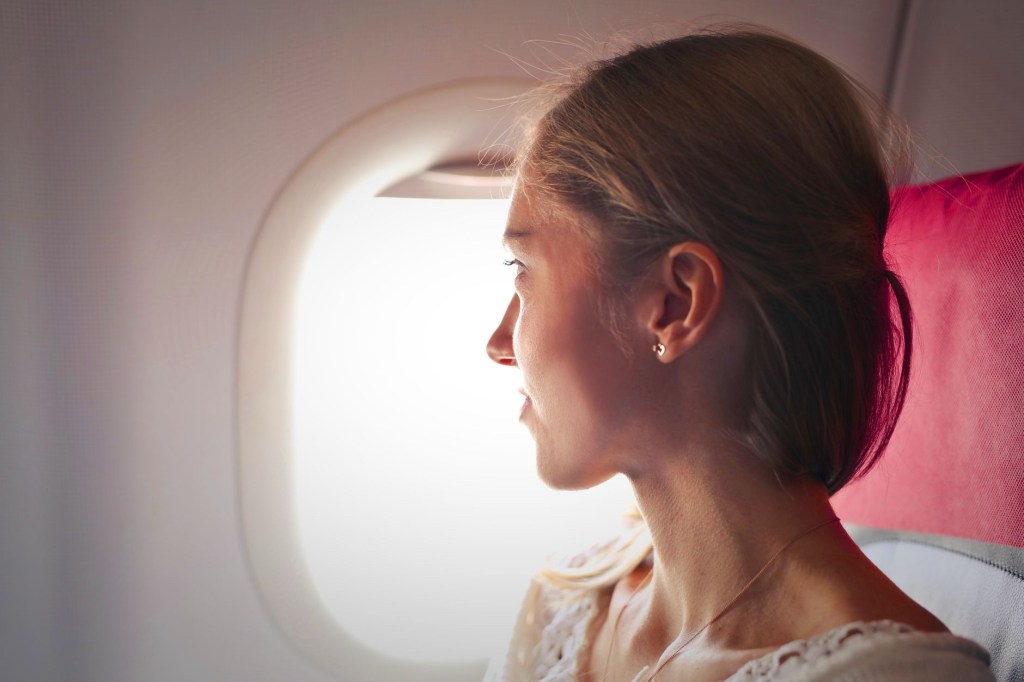
On a flight to Tokyo, I settled into the aisle seat I had intentionally chosen. On long flights, I always prefer the aisle. I like the freedom to stand up whenever I need to without asking someone else to move.
A few minutes later, a woman in her twenties sat down beside me. She looked polished and confident. After stowing her bag, she turned toward me.
For a moment, I thought she was going to introduce herself.
Instead, she said,
“Would you mind switching seats with my boyfriend? He’s sitting over there.”
It was a reasonable request.
Still, something about it didn’t sit right with me.
It Wasn’t About the Seat
People ask to switch seats all the time. Families want to sit together. Couples get separated during booking. Airlines change seat assignments.
None of that bothered me.
What stayed with me was how the request was made.
There was no introduction. No small conversation. No acknowledgment that she was asking a stranger to give up a seat he had intentionally selected.
The interaction felt transactional.
Not rude.
Just impersonal.
In that moment, I didn’t feel disrespected. I felt unconsidered.
There’s a difference.
One challenges your dignity.
The other reminds you how easily we overlook one another.
A Practical Complication
Rather than answering immediately, I told her I’d check with the flight attendant.
The attendant asked us to wait until after takeoff.
That turned out to be the right decision.
I had prepaid for meals and snacks, and everything was connected to my assigned seat. During meal service, the crew checked my boarding pass to make sure each order went to the correct passenger. Switching too early would have complicated things.
So we waited.
After dinner, I turned to her and said,
“Okay, we can switch now.”
An Unexpected Realization
By then, something had changed.
I realized I didn’t really want to sit next to her anymore.
She hadn’t done anything wrong.
I wasn’t angry.
But first impressions have a way of shaping our comfort with people, even when the interaction is brief.
Since she wanted to sit beside her boyfriend, moving actually worked out well for both of us.
I settled into my new seat, watched a movie, and enjoyed the rest of the flight.
The moment seemed over.
But it stayed with me.
Why It Stayed With Me
The more I reflected on it, the more I realized this wasn’t really a story about airplane etiquette.
It was about how ordinary interactions reveal the condition of our hearts.
Scripture reminds us,
“Do to others as you would have them do to you.” — Luke 6:31
That principle isn’t reserved for life’s major decisions.
It lives in everyday moments.
In our tone.
In our presence.
In whether we recognize the humanity of the person standing—or sitting—in front of us.
People often say, “It never hurts to ask.”
I think that’s true.
But the way we ask shapes the experience for everyone involved.
A simple introduction.
A warm smile.
Acknowledging that you’re asking someone for a favor.
Those things don’t guarantee a “yes.”
They communicate respect.
And respect has a remarkable way of inviting generosity.
A Lesson Worth Remembering
Travel places strangers into shared spaces where patience, courtesy, and kindness are constantly tested.
Most of those interactions disappear as quickly as they happen.
A few remain because they reveal something larger than themselves.
This one reminded me that kindness isn’t measured only by the favors we grant.
It’s reflected in the spirit we bring into every interaction.
As the Apostle Paul wrote,
“Let your gentleness be evident to all.” — Philippians 4:5
Gentleness isn’t weakness.
It’s awareness.
It’s recognizing that every person we encounter carries a story we know nothing about and a dignity worthy of acknowledgment.
Soul Insights
1. Presence is a form of respect.
When people feel seen, even briefly, they become more open to connection.
2. Tone often speaks louder than words.
The spirit behind a request can leave a deeper impression than the request itself.
3. Courtesy creates space for generosity.
Small gestures—a greeting, a smile, a sincere acknowledgment—can transform an ordinary interaction.
4. Assumption weakens connection.
When we expect rather than appreciate, we unintentionally create distance between ourselves and others.
5. Kindness begins before the favor.
It begins in the way we acknowledge another person’s dignity.
Final Thoughts
Looking back, I don’t remember much about that flight.
I remember the request.
More accurately, I remember how it was made.
Scripture tells us,
“A gentle answer turns away wrath…” — Proverbs 15:1
Even when there is no conflict, gentleness has the power to soften hearts, open conversations, and remind people that they matter.
Every day, we ask things of one another.
We ask for patience.
For understanding.
For time.
For help.
Perhaps the lesson isn’t simply whether we say yes or no.
Perhaps it’s remembering that every request is also an opportunity to honor the person we’re asking.
Because in the end, kindness isn’t revealed only in what we do for one another.
It’s also revealed in how we ask.
Your Turn
If you had been in my seat, would you have switched?
Would the way someone asked influence your decision, or would you have said yes regardless?
I’d love to hear your perspective.
© 2026 Amelie Chambord


Leave a Reply