“So… how was Korea and Japan?”
It should be one of the easiest questions to answer. Instead, it’s one of the hardest.
Every time someone asks, I pause because I suddenly have too much to say. My mind doesn’t replay the trip like a neatly edited travel documentary. It replays it like someone spilled a box of photographs across the floor.
A forest.
A wedding procession.
The smell of sushi.
The sound of train announcements.
Getting lost on the wrong platform.
The quiet streets of Kagurazaka.
A concert that still echoes in my heart.
None of these memories line up politely in chronological order. They all arrive at once, quietly asking for my attention.
Ironically, I discovered this not while talking about my trip, but while writing poetry.
When a Haiku Says More Than a Conversation
At Bible study, our icebreaker was simple:
Write a poem.
Without hesitation, my pen returned to Japan.
Kagurazaka
Wandering around quaint streets
Peace, serenity
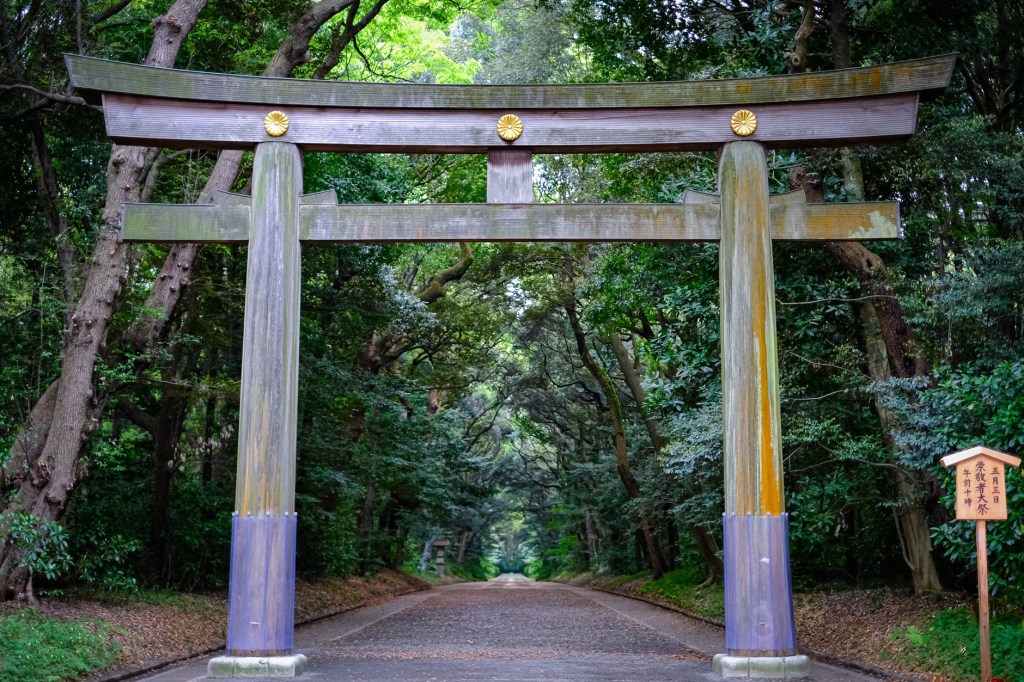
In Meiji forest
Silently walking on paved paths
Where is Totoro?
Then my thoughts wandered elsewhere.
Graceful swan lake dance
The Prince here he comes
Serendipity
The first two haiku carried me back to Japan almost instinctively. The third haiku wasn’t about Japan at all. It was about a BTS member. Earlier that evening, I had seen one of Jimin’s Dior advertisements, and my mind immediately drifted back to Busan, his hometown, a city I had recently visited on this trip. Memory doesn’t organize itself into neat folders labeled “Japan,” “Korea,” or “music.” One image leads to another until places, people, songs, and moments become part of the same story.
The Impossible Question
Earlier that evening someone smiled and asked,
“So… how was Korea and Japan?”
It’s a perfectly reasonable question.
It’s also impossible.
Do I tell them about walking through Meiji Forest, where towering trees muffled the noise of Tokyo until it felt like stepping into another world? I half expected Totoro to wander across the path.
Or should I describe witnessing a traditional wedding at Meiji Shrine—a moment of beauty that no itinerary could have promised?
Maybe I should tell them about wandering through Asakusa, eating sushi from a conveyor belt, laughing after realizing I’d boarded the wrong train platform more than once, or discovering that getting lost isn’t always a mistake.
Instead, my answer usually sounds something like this:
“It was amazing.”
True.
Hopelessly incomplete.
As writer Cesare Pavese once observed,
“We do not remember days; we remember moments.”
Looking back, I think that’s why answering questions about the trip feels so difficult. People ask me to summarize days, but my heart remembers moments—a quiet forest, a wedding procession, getting lost on a train platform, and the peaceful streets of Kagurazaka.
My Mind Thinks in Fragments
I’ve realized something about myself. My mind doesn’t think in paragraphs. It thinks in fragments.
When someone asks me about a meaningful experience, dozens of images compete for attention all at once. My thoughts arrive like puzzle pieces scattered across a table. Speaking requires assembling those pieces instantly.
Writing gives me permission not to rush.
Writing lets the fragments breathe.
Writing allows memories to find one another until they slowly become a story.
Perhaps that’s why Psalm 46:10 begins with a simple invitation:
“Be still, and know that I am God.” (Psalm 46:10)
Stillness has a way of revealing what hurried conversations often conceal.
More Than a Vacation
The truth is, the trip changed me in ways that aren’t immediately visible.
I returned home more confident traveling alone.
I became more curious about cultures different from my own.
I discovered that some of life’s richest moments aren’t found on an itinerary but in unexpected detours, wrong turns, quiet shrines, neighborhood streets, and conversations with strangers.
Oddly enough, traveling halfway around the world also made me appreciate coming home.
Home no longer felt ordinary.
It felt like a gift.
As T.S. Eliot beautifully wrote,
“We shall not cease from exploration, and the end of all our exploring will be to arrive where we started and know the place for the first time.”
Travel didn’t pull me away from home.
It helped me see home more clearly.
That reminds me of Paul’s words:
“Test everything; hold fast what is good.” (1 Thessalonians 5:21)
Travel has a remarkable way of helping us do exactly that—discovering what is good in the world while deepening our gratitude for what we’ve been given.
Why I Write
People often wonder why I spend so much time journaling.
This is why.
Conversation asks for highlights.
Writing welcomes the whole journey.
Conversations often become executive briefings.
Bullet points.
Quick summaries.
“Where did you go?”
“What did you eat?”
“What was your favorite part?”
Those questions aren’t wrong.
They’re simply too small for experiences that quietly reshape us.
Anaïs Nin once wrote,
“We write to taste life twice, in the moment and in retrospect.”
Exactly.
Writing doesn’t merely preserve memories.
It uncovers their meaning.
Only after putting words on paper do I begin to understand why certain moments still linger months later while others quietly fade away.
Perhaps that’s one reason Scripture repeatedly calls God’s people to remember.
“Remember the wondrous works that He has done.” (Psalm 105:5)
Memory isn’t simply about preserving the past.
It’s about recognizing how God was present all along.
Soul Insights
1. The soul remembers differently than the mind.
Facts disappear faster than feelings. Long after we’ve forgotten dates, schedules, and directions, we remember how a place made us feel. Meiji Forest remains vivid not because I memorized every detail, but because it offered peace that settled deep within me. Our souls often archive experiences by emotion rather than chronology.
2. Travel changes more than geography.
Crossing borders often reveals the unseen landscapes within ourselves. Confidence grows each time we successfully navigate unfamiliar places, ask for help, or embrace uncertainty. The greatest souvenirs are rarely the ones we purchase; they’re the quieter versions of ourselves we bring home.
3. Writing transforms fragments into meaning.
Memory rarely arrives in perfect sequence. It comes as scattered snapshots, sounds, smells, and emotions waiting to be connected. Writing gives those fragments a home, allowing us to discover patterns and lessons we couldn’t see while we were living them.
4. Home becomes more beautiful after you’ve been away.
Distance has a remarkable way of sharpening gratitude. Travel reminded me that adventure and contentment are not enemies. I can love discovering new places while also cherishing the familiar rhythms waiting for me back home. Exploration expands appreciation rather than replacing it.
5. Every meaningful story deserves room to breathe.
Not every experience belongs inside a quick answer. Some stories unfold slowly, revealing new layers every time they’re revisited. Perhaps the richest moments of our lives aren’t the ones we summarize best but the ones we continue discovering through reflection, conversation, and writing.
Final Thoughts
Perhaps the hardest question isn’t, “How was your trip?”
Perhaps it’s believing that the answer can fit inside a few sentences.
Meaningful experiences refuse to become grocery lists.
They resist becoming bullet points.
They ask for patience.
They ask for reflection.
Most of all, they ask to be remembered.
The older I become, the more convinced I am that writing isn’t simply recording life.
It’s returning to it.
Every journal entry, every poem, every essay invites me to walk those forest paths again, hear those train announcements again, smile at getting lost again, and remember not only where I traveled—but who I was becoming along the way.
Maybe that’s why some stories are never truly finished.
We don’t keep telling them because we haven’t moved on.
We keep telling them because they continue shaping who we are.
Your Turn
Have you ever struggled to answer the simple question, “How was your trip?”
What memory surfaced first?
Not the biggest attraction.
Not the most expensive meal.
The first image your heart quietly returned to.
I’d love to hear it.
Sometimes those first fragments reveal the deepest stories.
© 2026 Amelie Chambord


Leave a Reply