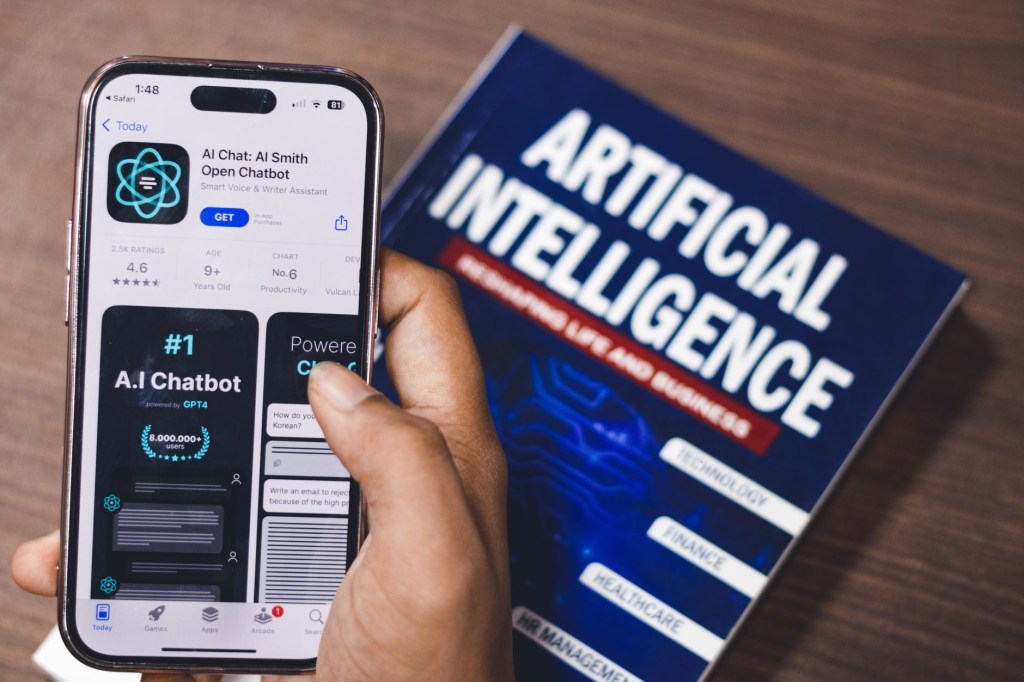
Artificial intelligence is everywhere. It writes emails, generates images, summarizes books, plans vacations, and sometimes seems suspiciously eager to help us organize our lives better than we organize them ourselves.
With every technological leap comes a familiar fear: What will this cost us?
One question rises above the noise:
Can we use AI without losing our souls?
My answer is a confident yes.
In fact, I believe the question reveals something deeper than technology itself. It invites us to examine what makes us human in the first place. Throughout history, every major innovation has sparked concern. Calculators were supposed to weaken our minds. Cameras were expected to diminish art. The internet was predicted to destroy meaningful conversation.
Yet here we are—still thinking, creating, painting, conversing, and searching for meaning.
As author Arthur C. Clarke famously observed, “Any sufficiently advanced technology is indistinguishable from magic.” The challenge is remembering that magic is not the same thing as wisdom.
Technology Changes Tools, Not Souls
Whenever a new technology arrives, people worry about what it might take from us. Some concerns contain a grain of truth. Every tool influences behavior. Every innovation reshapes habits.
But tools do not determine who we are.
They reveal who we are through how we choose to use them.
I use AI regularly. It helps me brainstorm ideas, organize thoughts, refine structure, improve clarity, and occasionally rescue a sentence that stubbornly refuses to cooperate. It has become part of my creative process.
Yet after using AI extensively, I have noticed something important:
Its default state is often generic.
Even when it sounds intelligent, it tends to gravitate toward familiar patterns and statistically likely conclusions. It can produce elegant language while missing the emotional heartbeat of a story.
That realization taught me something profound.
The value does not originate from the machine.
The value originates from lived experience.
As Proverbs 4:23 reminds us, “Above all else, guard your heart, for everything you do flows from it.” The heart remains the source. Technology merely assists the expression.
The Difference Between Information and Experience
More than once, I have asked AI to help refine a personal travel story. The facts remained accurate, but the emotional interpretation drifted away from reality.
A moment of uncertainty became a lesson in confidence.
A quiet observation became a dramatic revelation.
The writing sounded polished, but it no longer reflected what actually happened.
So I corrected it.
I restored nuance.
I reintroduced the details that mattered.
And every correction reinforced a simple truth:
AI cannot live a life.
It cannot stand exhausted in a crowded train station wondering which exit leads home. It cannot experience grief, relief, anticipation, wonder, or gratitude.
It can describe those experiences.
It cannot have them.
A map is not a territory.
A description is not an experience.
A simulation is not a life.
AI can process information, but meaning emerges when human beings reflect on their experiences.
Progress Is Powerful—But Purpose Matters
Technology itself is not the enemy. Used wisely, it can become a remarkable force for growth and betterment. As Bill Gates once said, “The advance of technology is based on making it fit in so that you don’t really even notice it.” The best tools quietly amplify human capability rather than replace human identity.
Likewise, Winston Churchill wisely noted, “To improve is to change; to be perfect is to change often.” Progress has always required adaptation.
The question is not whether technology advances. The question is whether our character advances alongside it.
Scripture offers a timeless perspective in Romans 12:2:
“Do not conform to the pattern of this world, but be transformed by the renewing of your mind.”
Technology can accelerate productivity, but only wisdom can guide direction.
Why Authenticity Still Wins
When people rely entirely on AI-generated ideas, experiences, and language, something often feels missing.
The structure may be flawless.
The grammar may be impeccable.
The logic may be airtight.
Yet the humanity feels absent.
Human beings are wonderfully imperfect. We hesitate. We struggle. We contradict ourselves. We occasionally tell stories that wander down side roads before finding their destination.
Ironically, those imperfections often create the deepest connections.
A travel story becomes memorable because of an unexpected mistake.
A memoir resonates because someone admits an uncomfortable truth.
A conversation matters because vulnerability enters the room.
The moments that move us are rarely optimized.
They are authentic.
As technology futurist Kevin Kelly observed, “Technology is anything that wasn’t around when you were born.” Every generation learns to navigate new tools. What endures is the human need for meaning, connection, and truth.
Soul Insights
1. Your Experiences Are Irreplaceable
No algorithm can accumulate your memories, relationships, failures, victories, or personal growth. Every experience you have becomes part of a unique perspective that no machine can replicate. AI can process information, but it cannot walk through your life journey. The stories that emerge from your experiences carry emotional depth because they were earned through living. That uniqueness remains one of humanity’s greatest treasures.
2. Wisdom Is More Than Knowledge
AI can access vast amounts of information in seconds, but wisdom requires discernment. Wisdom grows through reflection, mistakes, humility, and time. It involves understanding not only what can be done but what should be done. Human beings develop wisdom through relationships and lived consequences. That process cannot be automated.
3. Creativity Begins With Curiosity
Many people fear AI will replace creativity, yet creativity has always started with curiosity. The desire to ask questions, explore possibilities, and imagine alternatives originates within the human spirit. AI can assist with execution and organization, but curiosity remains deeply personal. The spark that inspires innovation still belongs to people. Technology may fuel the engine, but curiosity turns the key.
4. Authenticity Creates Connection
People connect with honesty more than perfection. Authentic communication includes uncertainty, vulnerability, and personal perspective. While AI can generate polished language, genuine connection emerges when individuals share real experiences and emotions. Readers, listeners, and friends instinctively recognize authenticity. It is often the imperfections that make communication memorable and meaningful.
5. Stewardship Matters More Than Capability
The greatest question surrounding AI is not what it can do but how we choose to use it. Every powerful tool carries responsibility. Human beings must decide whether technology serves wisdom, compassion, and growth or merely convenience and efficiency. Good stewardship requires intentionality and ethical reflection. The future will be shaped less by machines and more by the values of those who guide them.
The Soul Was Never in the Software
The danger is not that AI will steal our souls.
The danger is forgetting to bring one.
When we stop contributing our experiences, observations, questions, and humanity, our work becomes hollow regardless of the technology involved.
Jesus offered a timeless reminder in Mark 8:36:
“What good is it for someone to gain the whole world, yet forfeit their soul?”
That question remains relevant whether we are discussing wealth, power, influence, or artificial intelligence.
Technology can enhance our abilities.
It cannot replace our humanity.
The soul was never in the software.
It has always been in the person using it.
Final Thoughts
Artificial intelligence represents one of the most significant technological advancements of our era. It offers extraordinary opportunities for learning, productivity, creativity, and innovation. Yet its greatest value may be the way it forces us to revisit an ancient question: What makes us human?
The answer has never been our ability to calculate faster, process more information, or generate more content.
Our humanity resides in our experiences, relationships, values, faith, compassion, imagination, and capacity for meaning.
As long as we continue bringing those things into our work and our lives, no technology can take away what makes us human.
The soul remains exactly where it has always been.
With us.
Your Turn
How are you using AI in your daily life?
Take a moment this week to reflect on whether your technology is serving your values—or quietly shaping them. Use AI as a tool, not a substitute for your voice. Share your experiences, tell your stories, and contribute your unique perspective to the world.
Because the future does not need more generated content.
It needs more genuine humanity.
© 2026 Amelie Chambord


Leave a Reply