How do you balance work and home life?
Most people imagine “balance” as a perfectly arranged life. Color-coded calendars. Matching glass containers. Yoga at sunrise. Inbox zero. A woman smiling while holding a green smoothie and apparently experiencing zero emotional damage.
Meanwhile, real life looks more like sprinting out the door while eggs cook on the stove, answering an email mentally while brushing your teeth, and wondering if adulthood is just a long-running group project nobody wanted.
For years, I thought balance meant learning how to carry more.
More responsibilities.
More emotional labor.
More expectations.
More pressure to always be available.
Then one day I realized something embarrassingly simple:
Balance had less to do with carrying everything well and more to do with knowing where I end.
So now?
I go to work early so I can leave early.
I do my job well.
Then I come home.
And when I get home, I belong to my actual life again. That decision changed more than my schedule. It changed my nervous system.
I Stopped Treating My Home Like a Second Office
One of the healthiest boundaries I ever created was refusing to drag work into my living room.
Work already takes enough.
It takes attention. Decision-making. Emotional bandwidth. Patience. Problem-solving. Memory. Social energy. Sometimes even your appetite and sleep if you let it expand unchecked like foam insulation filling every corner of your life.
Ecclesiastes 3:13 says, “That each of them may eat and drink, and find satisfaction in all their toil, this is the gift of God.”
That verse hits differently after years of realizing some people work constantly yet never actually enjoy their lives.
I didn’t want to become efficient at surviving while forgetting how to live.
So I started protecting my evenings.
I leave work at work.
No replaying conversations for three hours.
No mentally rebuilding tomorrow’s calendar at 9:47 p.m.
No pretending stress is productivity.
My apartment became a landing place again instead of an extension of the office.
Early Mornings Bought Me Freedom
People ask me why I arrive at work so early.
Simple.
Traffic is lighter. My brain is clearer. The building feels calmer. I can think before the avalanche begins.
But the bigger reason?
Leaving early feels like reclaiming part of my humanity.
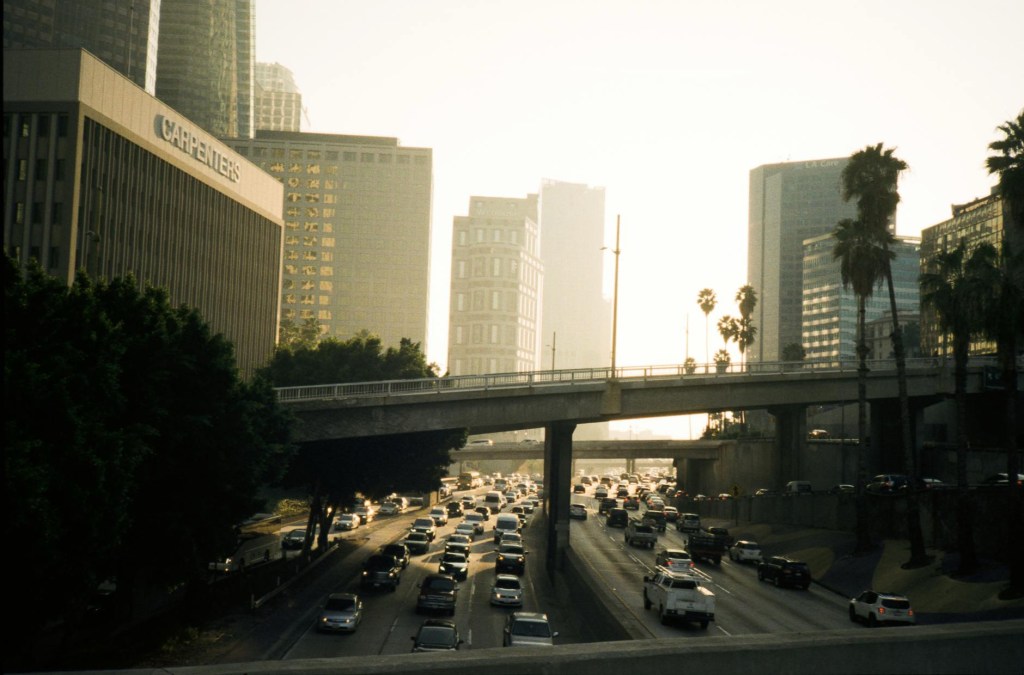
Every hour matters in Los Angeles. Anyone who has sat trapped on the 405 watching brake lights glow like a red river of despair understands this spiritually.
Getting home earlier gives me back fragments of myself.
Time to write.
Time to study.
Time to bake something badly and still eat it proudly.
Time to watch K-dramas and emotionally recover from fictional men making eye contact in the rain for twelve consecutive episodes.
Time to catch up with BTS content and laugh at absolute chaos unfolding on Weverse at midnight Korea time.
That free time is not “extra.”
It is my life.
As author Annie Dillard once wrote, “How we spend our days is, of course, how we spend our lives.”
Not someday.
Now.
Hobbies Saved Me From Becoming Emotionally One-Dimensional
One of the sneakiest forms of burnout happens when a person only exists in one role.
Employee.
Manager.
Caretaker.
Provider.
Problem-solver.
A human being slowly becomes a job title with groceries.
That’s dangerous.
I need creative movement in my life or I start feeling emotionally compressed.
So I read.
I write.
I study random things.
I bake.
I explore new hobbies.
I fall into rabbit holes about travel, marketing, photography, or Korean skincare ingredients at 11:20 p.m. like an investigator assigned to moisturizer crimes.
Those activities are not distractions from life.
They are evidence that my inner world is still alive.
Colossians 3:23 says, “Whatever you do, work at it with all your heart, as working for the Lord.”
Notice that scripture says whatever you do.
Not only paid work.
A meaningful life cannot survive on obligation alone.
Rest Is More Than Sleep
One thing I learned the hard way is that exhaustion is not always physical.
Sometimes your body is technically sitting down while your mind is still clocked in.
You answer emails in your imagination.
You rehearse conversations that never happened.
You anticipate problems that do not exist yet.
That kind of mental overextension slowly drains joy out of ordinary moments.
A K-drama episode becomes background noise because your brain is still trapped inside a spreadsheet from six hours ago.
Psalm 127:2 says, “In vain you rise early and stay up late, toiling for food to eat—for he grants sleep to those he loves.”
God never asked us to prove our worth through constant depletion.
Rest is not laziness.
Rest is maintenance.
Author Pico Iyer wrote, “The real luxury is time.”
I believe that deeply now.
Not expensive things.
Not status.
Not appearing busy enough to impress strangers.
Time.
Time to think.
Time to laugh.
Time to create.
Time to notice your own life while you are living it.
Balance Looks Boring From The Outside
Nobody applauds boundaries.
Nobody throws confetti because you left work on time and spent the evening reading while banana bread cooled in the kitchen.
That ordinary rhythm may be one of the healthiest things a person can build.
A sustainable life rarely looks cinematic while it is happening.
It looks repetitive.
Intentional.
Grounded.
You wake up.
You work.
You return home.
You care for your soul before another day begins again.
Tiny decisions repeated consistently create emotional stability over time.
Not perfection.
Stability.
And stability has become wildly underrated in a culture addicted to burnout performances.
Soul Insights
1. Work expands wherever boundaries disappear.
A job will continue taking from you for as long as you keep handing over access to your emotional bandwidth. Many people accidentally train others to expect constant availability because they fear disappointing someone. Over time, that habit creates resentment disguised as professionalism. Healthy boundaries protect both your peace and the quality of your work. A rested person usually performs better than an emotionally fried one pretending to push through.
2. Free time reveals who you are outside survival mode.
Many adults reach a frightening realization: they no longer remember what they enjoy. Every hour became attached to responsibility, productivity, or obligation. Hobbies reconnect people to curiosity, playfulness, and identity beyond performance. Watching a drama, baking cookies, studying scripture, or writing poetry may look small externally, yet those moments rebuild the inner self piece by piece. Joy often returns through ordinary rituals rather than dramatic reinventions.
3. Mental rest requires intention.
A person can physically leave work while mentally remaining trapped there all night. Emotional carryover quietly steals presence from relationships, creativity, and even sleep. Learning how to mentally transition between environments becomes a survival skill in adulthood. Music, prayer, journaling, reading, or evening routines can help the brain understand that the workday has ended. Peace rarely arrives accidentally in modern life.
4. Early mornings can create emotional breathing room.
Starting earlier changed the emotional texture of the day for me. Fewer interruptions allowed clearer thinking before demands started stacking on top of each other. Leaving earlier also reduced the feeling that life existed only between work shifts. Small schedule adjustments can dramatically affect emotional health over time. Sometimes balance begins with a simple logistical decision rather than a major life overhaul.
5. A meaningful life needs replenishment, not just responsibility.
Human beings were never designed to function like machines endlessly processing tasks. Creativity, laughter, learning, spirituality, friendship, and rest all contribute to emotional sustainability. Ignoring those areas eventually creates a hollow kind of success where everything looks functional externally but feels depleted internally. Replenishment allows people to keep showing up with sincerity instead of survival-mode detachment. A healthy life includes both contribution and restoration.
Final Thoughts
Balance stopped feeling impossible once I stopped chasing perfection.
I do not manage every day flawlessly. Some evenings still dissolve into exhaustion. Some weeks feel overloaded. Some nights involve staring into the refrigerator wondering how adulthood became eighty-seven recurring tasks wearing different outfits.
But overall?
I built a rhythm that lets me remain human.
That matters to me more now than appearing endlessly productive.
Because at the end of life, I doubt anyone wishes they had answered a few more emails.
People remember conversations.
Music.
Laughter.
Stories.
Meals.
Friendship.
Creation.
Presence.
A balanced life is not built through grand gestures.
It is built one protected evening at a time.
Your Turn
What part of your life currently feels overcrowded?
What activity makes you feel most like yourself again?
And if work stopped consuming your evenings, who would you become with that reclaimed time?
Metadata Package
Slug:
leave-on-time-work-life-balance
Excerpt:
Some people bring work home in a laptop bag. Others carry it in their nervous system. This post is about leaving both at the office, reclaiming your evenings, and remembering that your life deserves more than constant exhaustion, traffic, and unanswered texts while reheating leftovers.
Image Suggestions:
- Early morning Los Angeles freeway with sunrise glow
- Cozy apartment evening with books, tea, and laptop closed
- Baking ingredients spread across a kitchen counter
- Desk setup at dawn with coffee and planner
- Woman watching a K-drama wrapped in a blanket with city lights outside
Tags:
work life balance, burnout recovery, emotional wellness, Christian blog, faith and work, personal growth, boundaries, healing, Los Angeles lifestyle, adulting, creative living, BTS ARMY, K-dramas, rest culture, self care, women and burnout
Category:
Lifestyle, Faith, Personal Growth, Reflection, Work Culture
Social Media Blurb (Facebook/Threads):
Do you ever leave work… but mentally stay there for another five hours?
Like your body made it home, but your brain is still answering emails while holding a fork over the kitchen sink?
Yeah. Me too.
So I started protecting my evenings harder. I go to work early so I can leave early. Then I come home and actually LIVE. K-dramas. BTS chaos. Writing. Baking. Reading. Random hobbies that make me feel like a person again instead of a walking Outlook calendar.
Turns out balance is less about perfection and more about deciding where work stops and your actual life begins.


Leave a Reply