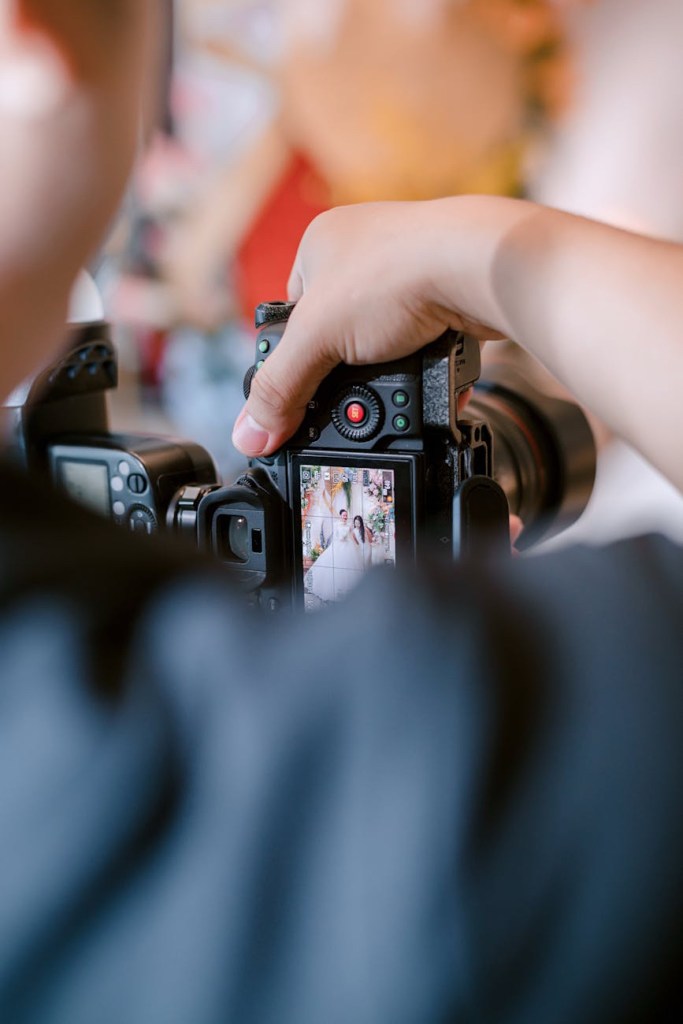
Some regrets arrive loudly. Others show up later on a laptop screen while reviewing photos at the end of the workday.
That was how this one found me.
Earlier that morning, I stood on a large lawn under a bright California sun photographing a memorial service honoring fallen law enforcement officers. White wooden chairs stretched beneath canopies. Marines stood holding flags before the procession began. Rose bearers waited near the aisle while coworkers, officers, executives, and families slowly filled the space.
Before the ceremony started, the atmosphere almost felt like a reunion. People smiled, hugged, shook hands, and caught up with coworkers they had not seen in a while. Conversations floated across the lawn while the wind moved through the flags overhead.
Then the names began.
One by one, representatives carried roses down the aisle for officers who had died in service.
And somewhere between adjusting my camera settings and scanning for angles, I realized later that the strongest thing I carried home from that event was not the photos I captured.
It was the moments I let pass.
As Ecclesiastes 3:1 reminds us, “For everything there is a season, and a time for every matter under heaven.” Some moments arrive with a clock already attached to them. They do not linger while we gather certainty.
The Difference Between Looking and Seeing
Photography has taught me that people reveal themselves in fragments.
A tightened jaw.
A glance downward.
Hands clasped too tightly.
A smile that disappears the second someone stops speaking.
That day, I photographed Marines holding flags before the ceremony. I took wide shots of the lawn, candid photos of coworkers talking, audience reactions, and procession moments as rose bearers walked down the aisle.
One image stayed with me more than the others.
A coworker walked across the lawn carrying a framed photo of a fallen colleague while the wind lifted her hair behind her. Nothing about the moment was staged. The movement happened naturally. The sunlight hit at the right angle. Her expression remained focused ahead while the frame rested against her side.
The second I clicked the shutter, I knew the image worked.
But later, while reviewing the gallery, I kept thinking about the shots I missed instead.
I should have moved closer to photograph individual expressions before the ceremony began. I should have covered the opposite side of the lawn earlier. I should have captured more candid reactions from family members as names were being read.
The frustrating part?
I recognized many of those moments while they were happening.
I just hesitated.
Photographer Dorothea Lange once said, “The camera is an instrument that teaches people how to see without a camera.” Ironically, sometimes the lens also reveals how often we delay acting inside our own lives.
When Respect Becomes Hesitation
Years ago, before BTS became globally untouchable, I sat 32 rows behind them at an event.
At the time, I was part of fan efforts helping push their music onto American radio stations. ARMYs across the country were organizing requests, tracking spins, contacting stations, and doing everything possible to help their music break into spaces that still underestimated them.
I remember looking toward them and thinking:
I should go say hello.
Not for a selfie.
Not for attention.
Just to tell them:
“We believe in you. We’re working hard because your music matters to us.”
But people already crowded around them.
Living up in Los Angeles teaches you something about celebrities: you do not overwhelm them. You respect their space. You act normal. You leave them alone.
So I stayed where I was.
Even while sitting there, I knew the opportunity was disappearing in real time.
I knew I would regret it.
That memory returned while reviewing the memorial photos because both moments carried the same pattern:
hesitation disguised as politeness.
Sometimes caution is wisdom.
Sometimes caution is fear dressed professionally.
James 4:17 says, “If anyone, then, knows the good they ought to do and doesn’t do it, it is sin for them.” That verse convicts me because missed opportunities are not always dramatic acts of rebellion. Sometimes they are smaller moments where we already know what we should do, yet still remain seated.
The Observer Problem
One thing I’ve noticed about photography is that it changes your relationship with memory.
When I am behind the lens, I become hyperaware of composition, movement, lighting, and timing. Part of my attention leaves the experience itself and starts scanning for details instead.
I am present.
But not fully participating.
That division exists outside photography too.
At concerts, people sometimes watch giant screens more than the performers standing directly in front of them. The screen feels easier because somebody else already chose where your eyes should go. You no longer need to decide what matters. The camera operator decides for you.
I’ve done this myself.
Instead of searching for the members onstage, waving my light stick, and fully engaging with the atmosphere, I found myself watching the screen.
Documenting.
Observing.
Framing.
Not fully entering.
Writer Susan Sontag once wrote, “To photograph is to participate in another person’s mortality, vulnerability, mutability.” I would add this:
sometimes photography also exposes how often we watch life instead of stepping into it ourselves.
Moments Do Not Wait for Certainty
The older I get, the more I realize hesitation has consequences that rarely announce themselves immediately.
Most missed opportunities do not look dramatic at first.
They look small.
Harmless.
Reasonable.
You wait another minute before speaking.
You stay seated.
You convince yourself there will be another chance.
You decide now is probably not the right time.
Then the aisle clears.
The crowd moves.
The conversation ends.
The artist leaves.
The wind changes direction.
The moment disappears permanently.
A blurry photo can still exist.
A missed moment leaves nothing behind except imagination.
Psalm 90:12 says, “Teach us to number our days, that we may gain a heart of wisdom.” Wisdom is not only about making careful decisions. Sometimes wisdom means recognizing when caution has overstayed its welcome.
Soul Insights
1. Hesitation often sounds responsible at first.
Many missed opportunities do not announce themselves as fear. They arrive disguised as politeness, timing, professionalism, or respect. That is what makes hesitation difficult to recognize in real time. I told myself I was being considerate both at the memorial service and years earlier with BTS. Looking back, I can now see that respect and hesitation were standing side by side, and I struggled to tell them apart.
2. Participation creates stronger memories than observation.
When I fully engage in an experience, I remember conversations, emotions, and interactions more clearly. When I remain behind the lens too long, my memories attach themselves more to images than to emotional presence. I remember how the wind moved my coworker’s hair because the camera froze the moment for me. But emotional texture fades when part of my mind stays occupied with documenting instead of living. Life feels fuller when I allow myself to enter it instead of merely recording it.
3. Missed opportunities linger longer than failed attempts.
Failure creates closure. Hesitation creates alternate timelines. The mind keeps replaying the version where you spoke first, moved closer, or took the shot. That unfinished possibility becomes heavier over time because nothing replaced it with resolution. Regret grows strongest around moments where we already knew what we wanted to do but still held ourselves back.
4. Timing matters more than perfection.
Photography teaches this brutally. A technically imperfect photo captured at the right moment often carries more emotional weight than a perfect shot taken too late. Life works similarly. Many meaningful moments require movement before certainty arrives. Waiting too long in search of the perfect opening usually means the opening disappears altogether.
5. Life rarely pauses while we decide.
This may be the hardest lesson for me personally. Opportunities continue moving whether or not I feel fully prepared. People leave rooms. Seasons change. Conversations end. Some moments never circle back a second time, which means discernment must sometimes happen quickly instead of endlessly.
Final Thoughts
I still think about the shots I missed at the memorial service.
Not because the event went badly.
Not because the photos failed.
But because the experience exposed a pattern I have seen before in my own life.
Moments pass while we negotiate with ourselves.
And sometimes the greatest loss is not failure.
It is unnecessary distance between ourselves and the life unfolding directly in front of us.
Maybe that is why certain memories remain unsettled for years. Deep down, we recognize the exact second we could have stepped forward and chose not to.
The aisle cleared anyway.
The music continued anyway.
The moment moved on without waiting for certainty.
Your Turn
What is one moment in your life you still think about because hesitation got there first?
Not the catastrophic mistake.
Not the life-altering disaster.
Just the opportunity that quietly passed while you were still deciding whether you were allowed to take it.
© 2026 Amelie Chambord


Leave a Reply