What are three objects you couldn’t live without?
If someone stripped life down to the studs and said, “Choose what remains,” my answer would sound almost primitive.
Food. Clothing. Shelter.
That’s it.
Everything else feels like glitter resting on solid stone. Beautiful, yes. Necessary, no. When I really think about it, survival has always been simple. We complicated it.
Jesus taught us to pray, “Give us this day our daily bread” in Matthew 6:11. Daily bread. Bread, not abundance. Bread, not applause. Bread reminds me that dependence is part of design. My body refuses to let me forget it.
Food: Dependence Made Visible
Food keeps me alive, but it also keeps me grounded. Hunger levels ego quickly. I can plan, invest, write, strategize, and dream about Provence cottages and sustainable income streams, but without nourishment, all ambition collapses. The body demands honesty.
My measured half cups of lentils and quinoa. Olive oil warming in the pan. Breakfast before a long travel day. These rhythms feel small, yet they are sacred in the truest sense. They tether me to what is real.
Food also trains trust. Jesus pointed to the birds in Matthew 6:26 and said, “Your heavenly Father feeds them.” Birds wake up and sing before breakfast. They trust provision before proof. That image recalibrates me every time.
Clothing: Dignity Worn Daily
Clothing shields more than skin. It protects dignity. After the fall, God clothed Adam and Eve before sending them into the world. Covering came with care. Fabric became compassion.
Clothing tells a story about stewardship. The dress I hemmed myself before flying across the world. The intentional outfit chosen for a wedding. Presentation says, I value myself and I honor this moment.
Paul wrote in 1 Timothy 6:8, “If we have food and clothing, we will be content with that.” Contentment sounds radical in a culture obsessed with upgrades. Yet sufficiency carries strength.
Henry David Thoreau once said, “A man is rich in proportion to the number of things he can afford to let alone.” Wealth by subtraction. That perspective loosens the grip of comparison.
Shelter: The Gift of Protection
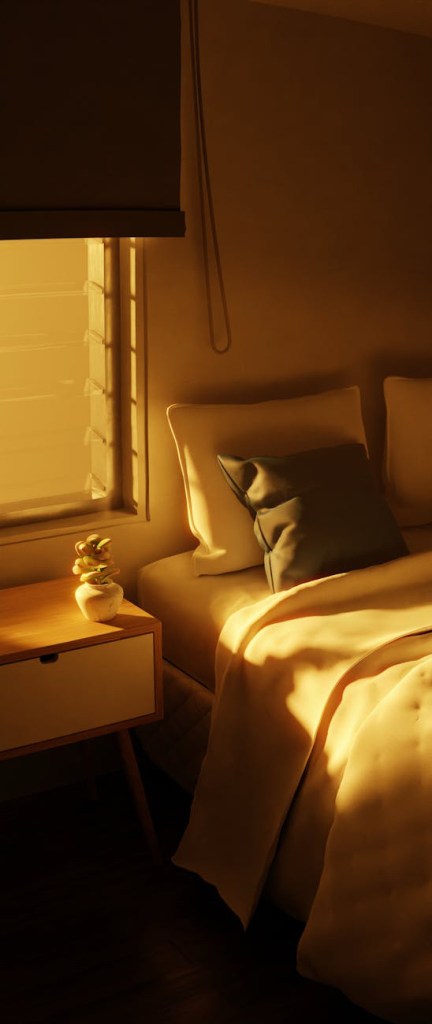
Shelter is the exhale after a long day. A door that closes. A bed that receives you. A kitchen where discipline and nourishment meet. A desk where words turn into legacy.
Shelter shapes internal climate. A protected space allows prayer, reflection, tears, laughter, creativity. Order in the outer room often invites order in the inner life.
Anne Frank wrote, “Think of all the beauty still left around you and be happy.” She wrote that in hiding. Shelter meant survival. Bread meant rationing. Gratitude still found oxygen.
C.S. Lewis reminds us, “God cannot give us a happiness and peace apart from Himself, because it is not there.” Shelter protects the body. God steadies the soul.
Soul Insights
1. Simplicity Reveals the True Source
When I strip life down to essentials, illusion falls away. Daily bread becomes miracle rather than entitlement. A roof overhead becomes evidence of mercy rather than square footage. Comparison loses volume because focus sharpens. Gratitude expands in uncluttered spaces. Essentials expose dependence, and dependence draws me closer to God.
2. Excess Often Hides Anxiety
Accumulation sometimes masquerades as security. More subscriptions, more shoes, more upgrades can feel like insulation against uncertainty. Yet security rooted in inventory remains fragile. Trust rooted in God builds stability that markets cannot shake. The birds do not warehouse peace. Their song arrives before proof.
3. Dignity Strengthens Identity
Clothing represents more than appearance. It represents care. When I dress with intention, I communicate self-respect without words. Presentation becomes stewardship of the body entrusted to me. Identity deepens when dignity guides daily choices.
4. Shelter Shapes Spiritual Climate
The condition of my home influences the condition of my heart. Order invites clarity. Warmth invites reflection. A safe space invites vulnerability and prayer. Stewarding shelter becomes stewarding peace.
5. Contentment Is Learned Power
Contentment does not fall from the sky fully formed. Paul described it as something learned. Learning requires repetition and humility. Choosing gratitude over comparison strengthens resilience. Stability frees energy for calling rather than consumption.
Final Thoughts
Food sustains the body. Clothing preserves dignity. Shelter guards rest.
Everything else sparkles as gift, not requirement.
When foundation feels secure, ambition becomes celebration instead of desperation. Gratitude becomes posture instead of performance. Life already holds enough.
Your Turn
If everything glittered away and you could keep only three, what would remain?
© 2026 Amelie Chambord


Leave a Reply