You get to build your perfect space for reading and writing. What’s it like?
There are spaces that simply hold furniture, and then there are spaces that hold you. If I were given the chance to build my perfect reading and writing room, it would not be about trends or productivity hacks. It would be about atmosphere, breath, and permission. A place that invites thought without forcing it, that welcomes rest without guilt, and that understands words arrive on their own timing. This room would not rush me. It would meet me exactly where I am.
A Personal Library With a Pulse
The room would be large, open, and grounded, more like a private library than a typical office. Floor-to-ceiling bookshelves would wrap the walls, filled with novels, poetry, theology, memoirs, and the dog-eared companions that have shaped my thinking. In the center, a deep couch would offer a place to read, reflect, or simply sit and listen to my thoughts catch up with me. There is something about being surrounded by books that reminds me how much has already been said, and how my small contribution still matters. Ecclesiastes reminds us that there is nothing new under the sun, and yet every voice adds its own inflection to the story.
In one corner, a sturdy table would wait patiently. Not ornate, not intimidating, just honest. It would hold notebooks, pens, and the occasional coffee cup, ready for the moments when writing decides to arrive unannounced. As novelist Ray Bradbury once said, “You must stay drunk on writing so reality cannot destroy you.” This room would understand that kind of devotion. It would not demand output. It would create the conditions where words feel welcome.
Light, Music, and the Freedom to Breathe
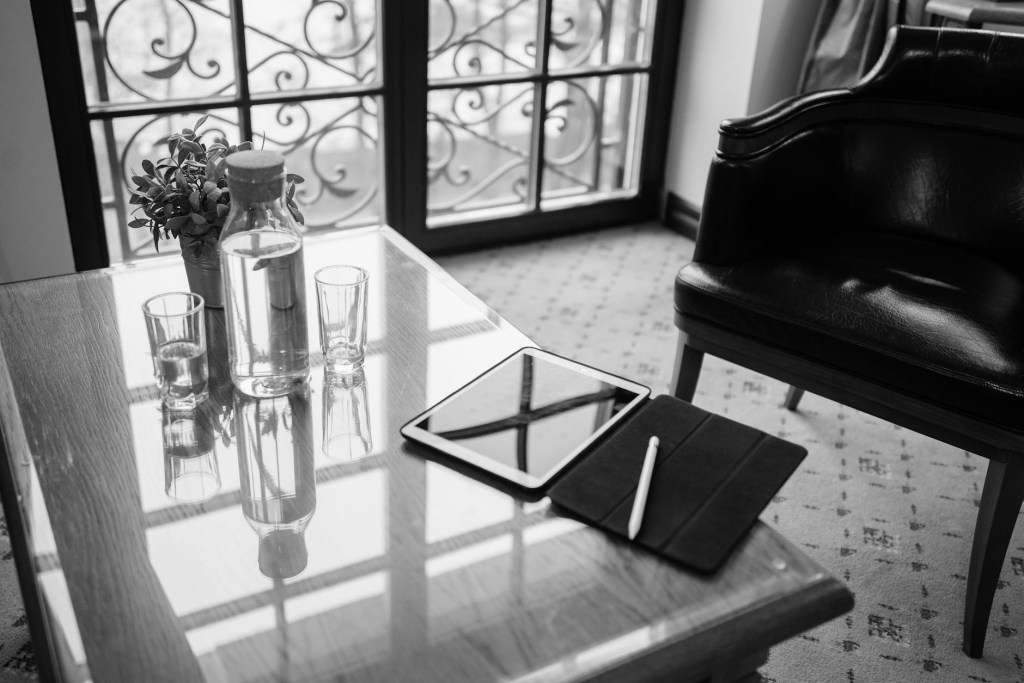
French windows would line one wall, opening onto a small balcony where sunlight pours in throughout the day. Morning light would stretch across the floor, and afternoon light would soften everything it touches. That steady glow would be a reminder that time is moving, but not urgently. Psalm 119 speaks of God’s word as a lamp to our feet and a light to our path, and I imagine this room carrying that same gentle guidance.
Built into the walls would be a stereo system, because music has always been part of how I process the world. Some days it would be instrumental, some days jazz, some days something familiar that feels like home. Music has a way of opening doors language alone cannot. As Friedrich Nietzsche observed, “Without music, life would be a mistake.” In this room, sound would not distract from the work. It would deepen it.
Soul Insights
1. Space shapes honesty.
When a room feels safe, writing becomes less performative and more truthful. Surrounded by books and light, there is less pressure to impress and more freedom to explore. This kind of environment invites reflection rather than reaction. It allows thoughts to unfold instead of being forced. Over time, the space teaches you to trust your own voice.
2. Presence matters more than productivity.
A couch in a writing room is a statement. It says rest belongs here too. Creativity is not a machine that runs on command, and this space honors that reality. By allowing pauses, the work that emerges carries more depth and intention.
3. Light is a collaborator.
Natural light does more than brighten a room. It regulates mood, marks time, and gently reminds you that the world exists beyond the page. Writing in sunlight feels connected to life rather than cut off from it. It keeps the work embodied and grounded.
4. Music becomes emotional scaffolding.
A built-in stereo is not background noise, it is emotional architecture. Music holds feelings that words cannot always reach on their own. It can steady the nervous system, unlock memory, and create rhythm in thought. In this space, music partners with language instead of competing with it.
5. This room reflects faith in process.
The room does not demand constant output, and that in itself is an act of trust. Proverbs reminds us to commit our work to the Lord and our plans will be established, and this space lives that posture. It believes that what is meant to be written will arrive. Faith shows up not in urgency, but in patience.
Final Thoughts
My perfect reading and writing space is not about aesthetics alone. It is about alignment. A room that understands who I am, how I think, and how I listen for what comes next. It would not just house my work. It would quietly shape it.
Your Turn
Take a moment this week to notice the spaces where you think, pray, or create. Ask yourself what they encourage and what they discourage. You may not be able to redesign the room, but you can begin to design the intention.
By the way…
While you’re here, I’d love for you to explore my book 17 Syllables of Me and visit my website, SoulPath Insights.

Thank you for taking the time to read! 🤗
© 2025 Amelie Chambord


 Soul Path Insights
Leave a reply to Christina Vrba Cancel reply