When Beauty Interrupts the Ordinary
I was on my way to work when the rose stopped me.
Not metaphorically. Physically.
I had already entered work mode: mentally sorting through emails before opening Outlook, rehearsing conversations, calculating the pace of the day ahead. My body was walking toward the building, but my mind was already inside it, sitting at my desk beneath fluorescent lights.
Then I saw the rose.
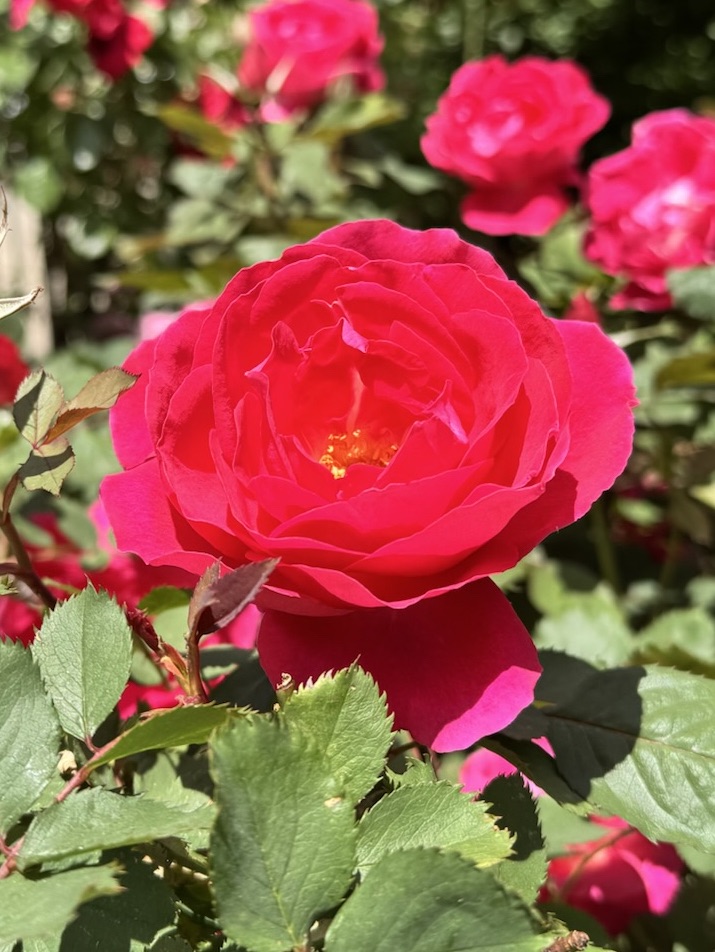
It stood near the entrance of our T-shaped building beside a cluster of pale pink and white blooms, but this one carried a completely different presence. Deep velvet red. Saturated enough to look unreal. The kind of color that belongs in old cinema curtains, wine-stained lipstick ads, or candlelight reflected against glass.
Not loud.
Certain.
“He has made everything beautiful in its time.” Ecclesiastes 3:11 settled into my thoughts almost immediately, because the moment felt strangely timed. I had not stepped outside searching for inspiration or revelation. I was simply trying to make it to work before my thoughts scattered in fifteen different directions before 7 a.m.
But beauty interrupted me anyway.
So I stopped.
I took a photo, then stood there for several seconds longer than necessary, staring at the bloom as morning air moved through the trees above me. Cars passed. Someone entered the building behind me. My workday continued waiting with all its deadlines and notifications.
Yet for those few seconds, the rose felt more important than productivity.
The Weight of Color
The color reminded me immediately of the Etude lip stain I love called Dracula Red.
Not bright red. Not playful red.
This shade carried depth to it. A velvet richness that almost seemed textured instead of visual. Looking at it felt similar to touching fabric in a dark department store dressing room where everything appears softer beneath dim gold lighting.
You do not glance at a color like that.
You absorb it.
“I’m not here to blend in. I’m here to be remembered.”
That sentence surfaced in my mind while I stared at the bloom, because the rose never fought for attention. It simply existed fully as itself among softer colors surrounding it.
And somehow that confidence made the entire arrangement more beautiful.
“Beauty is a nectar which intoxicates the soul,” T.C. Henley once wrote, and standing there near the building entrance, I understood exactly what he meant. Certain forms of beauty bypass logic entirely. They move through the body first. They slow your breathing. They rearrange the emotional temperature of an ordinary morning.
That rose did not solve anything in my life.
But it softened something.
When Beauty Disrupts the Ordinary
The fascinating part is that nothing externally changed afterward.
I still clocked in.
Still answered emails.
Still handled responsibilities.
Still moved through meetings and tasks and conversations.
Yet internally, the day carried a different texture after that moment.
“Stop and consider the wondrous works of God.” Job 37:14 came back to me later because that interruption felt less accidental and more like an invitation. Almost as if God placed beauty directly in my path before I gave the rest of my energy away to schedules, systems, and obligations.
Like a reminder.
Before spreadsheets.
Before performance.
Before output.
Look.
Breathe.
Receive something first.
I started wondering how many moments dissolve unnoticed simply because we move too fast to absorb them. How many flowers, skies, conversations, songs, and expressions pass through our lives while our attention remains trapped three tasks ahead of the present moment.
Modern life trains us to optimize everything except wonder.
We measure efficiency.
We measure progress.
We measure productivity.
Meanwhile, the soul keeps asking slower questions.
Did you notice the light this morning?
Did you feel alive for even ten seconds today?
Did anything make you pause?
Soul Insights
1.) Beauty interrupts—but never inconveniences.
That rose never begged to be seen. It simply bloomed fully where it was planted. Real beauty carries presence without performance, which may be why it feels grounding instead of exhausting. The interruption itself became a gift because it pulled me out of autopilot for a moment. Presence entered before pressure had the chance to consume the day.
2.) Colors can carry memory.
That shade of red immediately connected itself to texture, cosmetics, mood, elegance, and memory all at once. Human beings rarely experience beauty through one sense alone because emotion attaches itself to detail so quickly. Certain colors become emotional archives without us realizing it. One glimpse can unlock entire atmospheres stored somewhere beneath conscious thought.
3.) The body recognizes wonder before the mind explains it.
I stopped before I intellectually processed why the rose mattered. Something deeper reacted first. The spirit often notices significance faster than logic does, which explains why some moments feel important before we fully understand them. Paying attention to those internal pauses can reveal what our overworked minds regularly overlook.
4.) Small moments recalibrate entire days.
The rose occupied maybe ten seconds of my morning, yet I carried the emotional effect of it for hours afterward. That fascinates me. One moment of beauty shifted the internal climate of my day more effectively than productivity hacks ever could. Tiny experiences frequently shape emotional endurance more than dramatic events.
5.) Noticing is its own form of gratitude.
Psalm 19:1 says, “The heavens declare the glory of God,” yet declarations still require listeners. Attention itself becomes spiritual participation. When we notice beauty instead of rushing past it, we acknowledge that life contains more than transactions and responsibilities. Wonder returns when observation deepens.
Final Thoughts
Lately I’ve been wondering what would happen if we treated beauty less like decoration and more like instruction.
Not escapism.
Not luxury.
Not aesthetic performance for social media.
Instruction.
A reminder that the world still contains softness despite headlines, deadlines, traffic, exhaustion, and emotional overload.
That morning, I was not searching for transformation.
I simply wanted to get to work on time.
Yet grace met me beside a rose bush anyway.
“The earth has music for those who listen,” Shakespeare wrote, and maybe listening begins with smaller moments than we expect. A bloom near a stairwell. Sunlight against concrete. A stranger’s laughter. A familiar song entering the room at the exact right moment.
Maybe the soul survives through accumulation.
One beautiful interruption at a time.
So tomorrow, look up before rushing into the day.
Pause long enough to notice what almost escaped your attention.
The ripple might begin smaller than you think.
© 2025 Amelie Chambord


Leave a Reply