A wedding does something to me.
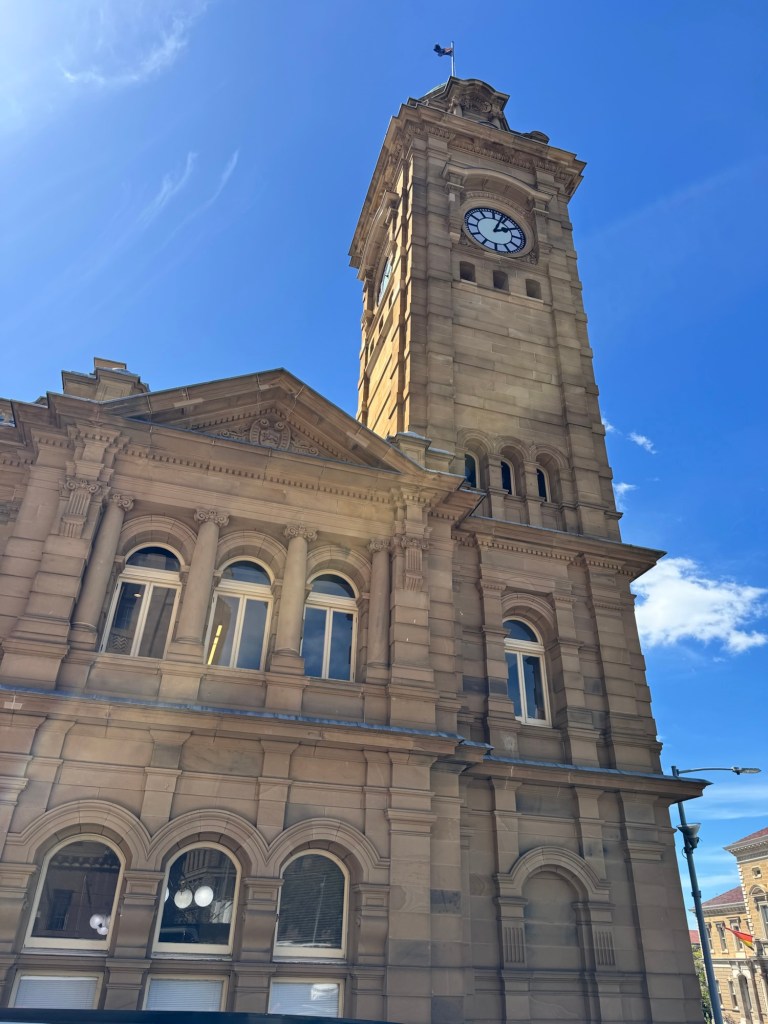
So does a harbor city with old stone buildings and a guide explaining that French explorers once brushed against Tasmanian soil before history moved on. So does a long lunch at Mures Upper Deck, watching boats rock gently against the dock while three generations share seafood and stories.
While others are taking photos, I’m leaning in and asking about childhood.
What was it like when you were growing up?
Was life hard for women?
Did women get opportunities as they do now?
This week in Hobart, after my niece’s wedding and a slow checkout from Villa Howden, I found myself doing it again. Asking a couple about their early years. Listening the way a graduate student studies primary sources.
“Let the wise listen and add to their learning,” Proverbs 1:5 says. I take that seriously. Listening feels like preparation.
I travel. I attend weddings. I sip waterfront coffee.
Underneath it all, I am studying.
Not for nostalgia.
For construction.
Watching Generations Before Writing My Own
Weddings compress time. A niece steps into marriage. A mother looked emotional. Grandparents carry decades in their posture. Three seasons standing in one room.
Ecclesiastes 3:1 reminds us that “for everything there is a season.” I saw that verse embodied. The young building. The middle holding. The elders reflecting. Each season shaped by different constraints and freedoms.
As the elder woman described her childhood, I felt something unexpected rise in me. Relief.
Her world had edges mine never had. Expectations were absorbed, not examined. Stability meant staying inside roles already assigned. No one questioned the script. It was simply how life worked. I realized I grew up with choice woven into my environment. Education. Income. The ability to live alone. The ability to decide. That kind of independence did not appear overnight. It took generations pressing against ceilings so I could stand in a room with windows.
Women now sometimes out-earn their husbands. They launch businesses. They choose whether to marry. They choose when to have children. The ceiling she pressed against became the floor her granddaughters stand on.
Sitting there, listening, I understood something sobering. I am benefiting from doors she had to push open slowly. Relief can turn into entitlement if left unchecked. Or it can become responsibility. If I drift with the freedom I inherited, it shrinks. If I steward it well, it expands.
“Study the past if you would define the future,” Confucius said. I am not studying for entertainment. I am studying trajectories.
Freedom compounds across generations. So does neglect.
Designing Instead of Drifting
Earlier in the week I had been reading about Henry VIII and the six wives, thinking about how power decisions ripple for centuries. I reflected on the Marcos era and how political cycles shape collective memory. On the city tour, learning about French architectural influence in Tasmania, I noticed how even brief presences leave marks in stone.
Lives leave architecture.
Psalm 90:12 says, “Teach us to number our days, that we may gain a heart of wisdom.” Numbering days feels less like counting and more like drafting. Days are beams. Choices are load-bearing walls.
At The Whaler that evening, I watched older couples talk across tables. Some looked aligned. Some looked transactional. You can tell after decades. The body keeps record. The eyes reveal weather patterns.
“A life is either a daring adventure or nothing at all,” Helen Keller wrote. Adventure, for me, is not chaos. It is deliberate courage. Choosing with awareness rather than drifting into default.
Jesus said in Matthew 9:29, “According to your faith be it done unto you.” Faith, then, is directional. It determines trajectory. It decides which doors stay open and which foundations get poured.
I am becoming a woman who studies before she builds.
A woman who asks before she decides.
A woman who observes long arcs before choosing her own.
If someone studies my life decades from now, I hope they feel gratitude.
Not because everything was flawless.
But because I used the freedom I inherited wisely.
I want my decisions to feel like open doors to them. I refuse to be the generation that wastes widened doors.
Soul Insights
1. Every person carries a multi-decade manuscript.
When I ask about childhood, I am flipping to chapter one. Patterns around money, gender roles, and security begin early and echo forward. Those early imprints explain present posture. Listening to origin stories reveals why someone chooses stability over risk or duty over desire. Wisdom hides in the first chapters.
2. Relief reveals inheritance.
My relief was not superiority. It was awareness. I recognized that I stand on sacrifices I did not personally make. Choice and independence arrived through decades of gradual change. Relief becomes holy when it leads to stewardship rather than complacency.
3. Culture evolves, character determines legacy.
Roles reverse. Pay scales shift. Opportunities widen. Still, integrity, discipline, and relational courage determine how a life reads over time. Trends decorate a generation, but character carries its weight. Observing that steadies my own priorities.
4. Observation is a spiritual discipline.
Proverbs urges the wise to listen. Psalm 90 calls for numbered days. Faith requires attentiveness. Asking elders about their lives is not small talk. It is a form of discernment. I gather insight so I can build with intention.
5. Design demands accountability.
If I analyze other people’s trajectories, I must also examine my own. Am I building financial stability? Am I cultivating faith that holds under pressure? Am I strengthening relationships that will age well? Future gratitude begins with present obedience.
Final Thoughts
Tasmania gave me a wedding, a harbor view, and a bus tour through history. It also gave me perspective.
I am not consuming stories. I am mapping them.
I am measuring long arcs before committing to my own. I am studying ceilings so I understand the cost of standing beneath open skies. I am learning that generational change is slow, layered, and expensive.
One day, someone may read my life the way I read theirs. I hope they find intention. I hope they find discipline. I hope they find faith translated into structure.
And most of all, I hope they feel gratitude.
Your Turn
Who in your life carries decades you have never fully explored?
Ask about their childhood. Ask about money. Ask about roles they accepted without question. Listen for patterns, not just anecdotes.
Then look at your own chapter and ask yourself:
What freedom have I inherited?
And what am I building with it?
© 2026 Amelie Chambord

 Soul Path Insights
Leave a comment