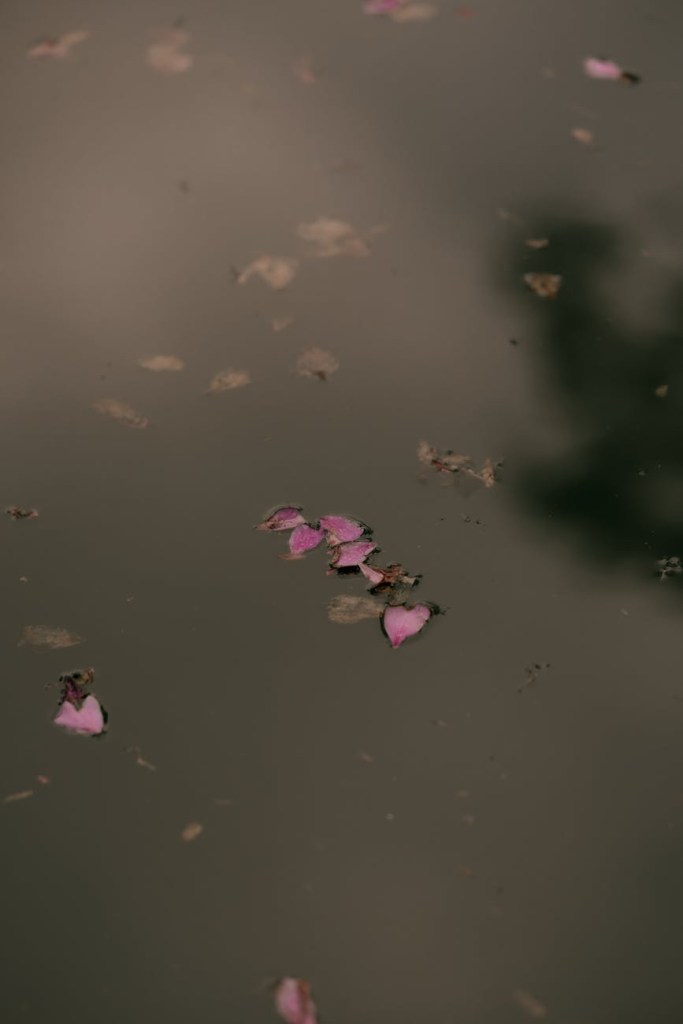
It felt like two worlds colliding. In the morning, I stood in a church sanctuary surrounded by grief: flowers on an altar, photos of a life once vibrant, and people wiping tears. By evening, I was at a bustling cultural festival filled with laughter, music, and the smell of sizzling food. It was surreal, really, to move from a memorial service to a celebration of life in the same day.
But maybe that’s the truth about faith: it doesn’t separate sorrow and joy. It holds them both. Because as strange as it sounds, both the funeral and the festival were sacred. One reminded me that life ends. The other reminded me to live before it does.
As Ecclesiastes 3:1–4 says, “There is a time for everything, and a season for every activity under the heavens… a time to weep and a time to laugh, a time to mourn and a time to dance.”
Where Grief Becomes a Mirror
At the memorial, I found myself reflecting more than mourning. My friend had been passionate about the Bible; he’d talk about God to anyone who’d listen. As the pastor spoke about his faith, I thought about how many people wait until life starts to fade before realizing how little time we truly have.
Memorials do something no self-help book can they strip you of pretense. They force you to ask: If my story ended today, would I be proud of how I’ve loved? I watched his family, their tears a mix of pain and peace, and felt that familiar tug of eternity, a reminder that our time here isn’t guaranteed, but grace is.
As James 4:14 puts it, “You are a mist that appears for a little while and then vanishes.” Sobering words, but not hopeless ones. Because they invite urgency, not despair. They push us to stop sleepwalking through life.
And I could almost hear God whisper: “You’re still here. So make it count.”
Where Joy Reclaims Its Place
Later that day, I met friends at a cultural festival that felt like a scene out of a K-drama: colorful booths, performers dancing in sync, food sizzling on open grills. Music blasted from speakers as kids ran around waving glow sticks. It was sensory overload in the best way.
And in that noise, I realized something beautiful: grief doesn’t cancel joy; it clarifies it. It sharpens your gratitude. It makes laughter feel like rebellion against despair. This was life continuing, defying the stillness of death.
Psalm 30:11 says, “You turned my mourning into dancing; you removed my sackcloth and clothed me with joy.” Maybe that’s what joy does. It clothes us when sorrow strips us bare.
As I walked through the festival lights, I remembered a quote from author Anne Lamott: “Joy is the best makeup.” Because joy doesn’t hide our pain—it highlights the places God has healed.
Living in the Sacred In-Between
Between the funeral and the festival, I saw the full arc of existence; grief and grace holding hands. One moment I was contemplating mortality; the next, I was tasting life in all its flavor and sound. And somewhere in between, I found peace.
It struck me that heaven and earth are always overlapping. We just forget to notice. The memorial taught me about endings; the festival reminded me about renewal. And together they echoed a truth that Romans 8:18 captures perfectly: “The sufferings of this present time are not worth comparing with the glory that will be revealed in us.”
Death, in its quiet finality, points us toward the living God who makes all things new. Joy, in its fleeting laughter, reminds us that we are still becoming.
Soul Insights
1. Mortality clarifies what matters.
It’s easy to live distracted: scrolling, planning, worrying. But sitting at a memorial forces you to see life through eternity’s lens. You start to ask bigger questions: Am I leaving love behind, or just achievements? Death is not a thief of meaning; it’s a mirror that reveals what we’ve neglected to cherish.
2. Joy is rebellion against despair.
Finding laughter after loss isn’t insensitivity; it’s resilience. Every smile, every shared meal, every burst of music says, “Death doesn’t get the final word.” Joy is how the soul fights back. It’s how we declare that even when life breaks us, God still builds beauty from the pieces.
3. Ordinary moments are sacred altars.
Life’s holiness hides in the smallest things, the sound of laughter at a street booth, the warmth of soup simmering at home, the way light reflects off a festival banner. These are God’s fingerprints in motion, proof that divinity isn’t confined to church walls.
4. Legacy isn’t what we leave; it’s what we live.
Your friend’s faith became his echo. Every person he shared the Word with carries a spark of his devotion. Maybe that’s what legacy truly is, not fame or wealth, but the faith and kindness we sow in ordinary days.
5. Faith is learning to live between endings and beginnings.
Life isn’t a straight line but a rhythm of dying and rising, grieving and growing. When we stop demanding perfect balance and simply embrace the tension, we discover that both the funeral and the festival are part of our spiritual becoming.
Final Thoughts
That day taught me that we live in a holy tension, the space between loss and laughter, endings and new beginnings. It’s not one or the other; it’s both. Because God is in the eulogies and the encores.
Grief reminds me how fleeting time is. Joy reminds me how full it can be. And together, they invite me to live wide awake, to love fully, serve deeply, and forgive quickly.
Your Turn
Tonight, light a candle for someone you’ve lost. Then, write down one thing that still makes you grateful to be alive. Let both the flame and the ink remind you: this life (brief as it is) is a gift worth celebrating.
© 2025 Amelie Chambord

 Soul Path Insights
Leave a comment