When good and evil blur, love still tells the truth.
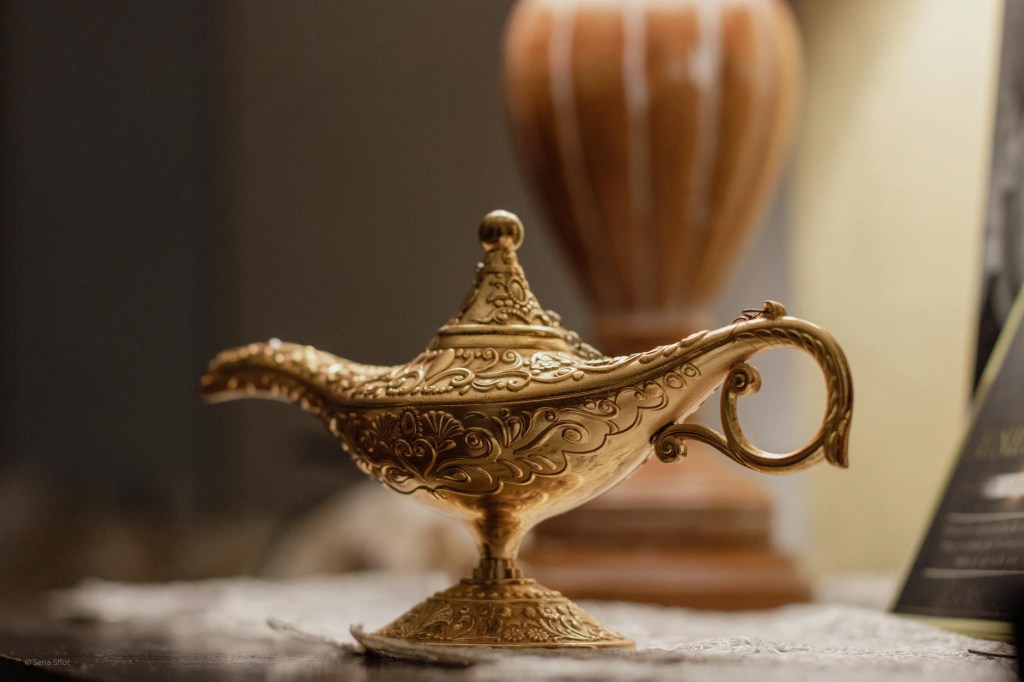
I didn’t expect a fantasy K-drama to make me wrestle with theology, but Genie, Make-A-Wish did exactly that. There I was, coughing on my couch, half-recovering from a cold, when I found myself completely drawn into the strange, contradictory world of Iblis and Gayoung: a love story between a spiritual being marked as evil and a human woman born with darkness in her heart. Somehow, this story about a genie, three wishes, and a girl who shouldn’t have loved him ended up reminding me of God.
What caught me wasn’t the magic or the CGI or even the wish-granting. It was the tension between what’s considered evil and what’s considered good. Iblis, whose purpose was to tempt and destroy, ends up protecting Gayoung at the cost of his own punishment. Gayoung, who was born with evil impulses, keeps choosing what’s righteous, even when it hurts. Together, they blur the line between sinner and saint, heaven and hell, love and redemption.
It’s unsettling and yet, it’s familiar. Because isn’t that the paradox of the gospel too?
“While we were still sinners, Christ died for us.” — Romans 5:8
God didn’t wait for us to become lovable before He loved us. He loved us into redemption. And maybe that’s the point. Love and redemption aren’t separate forces; they are two sides of the same divine coin.
The Contradiction Within Us
As I watched Iblis wrestle with his own nature, I couldn’t help but think of how often we do the same. We call it duality, contradiction, or complexity, that tug-of-war between what we want to be and what we actually are.
Gayoung’s heart reminded me of humanity’s constant conflict: to be born into imperfection but still long for light. The show framed it as mythology, but I saw a mirror of my own walk with God, the days I get it wrong, the moments I fall short, and the strange, beautiful truth that God still sees me as redeemable.
“Every saint has a past, and every sinner has a future.” — Oscar Wilde
Maybe that’s why the story hit me so deeply. Because in every contradiction, there’s an invitation: not to choose perfection, but to choose love, the kind that transforms, not condemns.
Love Through Redemption, or Redemption Through Love?
At first, I couldn’t decide which came first, love or redemption. Did Gayoung redeem Iblis because she loved him? Or did she love him because he was redeemable? Maybe the answer is yes to both.
True love, the kind that reflects God’s nature, doesn’t look away from what’s broken. It steps into it. That’s what makes grace so radical. It doesn’t deny darkness; it brings light into it. Just like Isaiah wrote,
“Though your sins are like scarlet, they shall be as white as snow.” — Isaiah 1:18
When I think about love in that way, I realize that redemption isn’t about erasing the past; it’s about redefining it. Like a scar that becomes a testimony. Like pain that turns into wisdom. Like a sinner who turns into a saint because love refused to let go.
“To love a person is to see all of their magic and remind them of it when they have forgotten.” — Unknown
That’s what God does for us. That’s what real love does for anyone.
Soul Insights
1. Love exposes, then heals.
Sometimes love doesn’t arrive to fix us; it arrives to reveal us. Like light hitting glass, it shows every crack and fracture we tried to hide. But it’s in those exposed places that healing begins. God’s love doesn’t shame; it transforms. Only when we stop hiding can grace do its deepest work.
2. Redemption doesn’t erase the past, it redefines it.
Our stories don’t disappear after forgiveness; they get re-written in the ink of mercy. I used to wish some chapters of my life could just vanish, but now I see they hold evidence of God’s persistence. What once felt like failure often becomes the very soil where purpose takes root.
3. Divine love never waits for worthiness.
If God waited until we “deserved” love, none of us would ever taste it. Love moves first. That’s its nature. It pursues before repentance, it forgives before apology, it redeems before proof of change. That’s how heaven works. That’s how we’re called to love too.
4. Even the fallen long for light.
There’s a reason stories of redemption move us so deeply because every human heart secretly believes there’s still hope, even for the ones who’ve wandered farthest. In the show, Iblis’ longing for Gayoung’s goodness mirrors the way our souls long for home. God built that homing signal into us.
5. Heaven still reaches into the darkest stories.
No one is beyond reach. Even the messiest, most painful, most “unsavable” story can still be rewritten by grace. If God’s hand can reach into hell to pull someone out, then surely He can touch whatever shadow we’re facing and turn it toward the light.
Final Thoughts
I think that’s what Genie, Make-A-Wish really showed me, that love and redemption aren’t opposites; they’re partners in the same dance. Love redeems because it can’t help but do so. Redemption loves because it remembers what it was like to be lost.
“Redemption is not perfection; the redeemed must realize their imperfections.” — John Piper
Maybe the moral isn’t whether love saves or redemption sanctifies. Maybe it’s simply this: both are proof that God never gives up on His creation.
“Whoever does not love does not know God, because God is love.” — 1 John 4:8
And perhaps the most divine thing we can do is to keep loving, even when it’s messy, even when it hurts, even when it feels contradictory, because love is how heaven gets remembered on earth.
Your Turn
This week, look for redemption in the contradictions around you — not by fixing them, but by loving through them.
Ask yourself:
Where might God be writing redemption in a place I’ve called “broken”? How can I choose love before I see results? What does grace look like in this chapter of my story?
Because maybe the story isn’t about escaping the darkness but about learning to shine right in the middle of it.

 Soul Path Insights
Leave a comment