There’s a certain kind of magic that happens when someone reads your work and gets it—without you having to explain the backstory, the metaphor, or the emotional unraveling behind it. No disclaimers. No decoding. Just pure, unfiltered resonance.
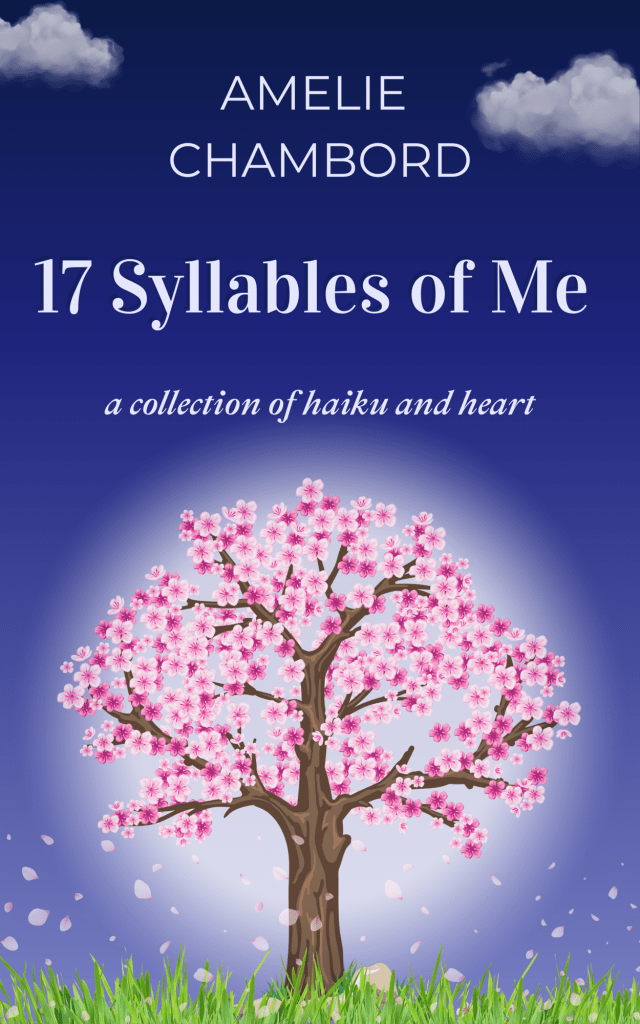
That happened to me this week. I had just finished a project I was deeply proud of—my debut poetry book, 17 Syllables of Me—and felt a quiet nudge to share it. So I walked into a coworker’s office—not to make a grand announcement, but simply to say I’d completed something that mattered to me. I handed him the proof copy. He flipped to Chapter 8, not knowing what to expect. After reading two of the haikus, he looked up and said, “I can relate to this.”
That was it.
Six words.
No questions. No commentary. Just a nod from the soul.
And honestly? That one sentence meant more to me than a five-star review.
The Quiet Power of Being Understood
When I was writing 17 Syllables of Me, I didn’t set out to explain myself. I set out to express myself. And there’s a difference. One defends. The other invites.
“Poetry is when an emotion has found its thought and the thought has found words.” —Robert Frost
I wasn’t trying to win him over or prove that my poems had meaning. I just handed the book over, let the words breathe, and waited.
He read a few pieces from Inward Glances—a chapter written in some of my most introspective hours. The kind of poems that come from deep, layered places you don’t always talk about out loud.
His reaction wasn’t dramatic. He didn’t launch into a full critique.
He just said, “I can relate to this.”
“Let the redeemed of the Lord tell their story.” —Psalm 107:2
And just like that, I felt seen—not just as a writer, but as a person.
When Words Find Their Moment
Later that night, while reflecting, a verse came to mind:
“Of making many books there is no end, and much study wearies the body.” —Ecclesiastes 12:12
At first, I chuckled. Ain’t that the truth, Solomon. Between the writing, formatting, revising, and mentally obsessing over commas, it does wear you out. But that verse isn’t just about the exhaustion of writing—it’s also a subtle invitation to let go of striving.
Because the point isn’t to publish endlessly.
The point is to speak truthfully.
“Like apples of gold in settings of silver is a word spoken in right circumstances.” —Proverbs 25:11
Soul Insights
1. Resonance doesn’t need rehearsal.
When a poem speaks directly to someone’s experience, it doesn’t need an introduction. The heart already recognizes its own language.
2. The most sacred reactions are quiet.
No standing ovation, no “OMG this is amazing!”—just a simple, “I can relate to this.” That moment holds more spiritual weight than applause.
3. Your audience doesn’t have to be big to be meaningful.
One reader. One connection. That’s enough to remind you why you’re doing this in the first place.
4. You’re not writing for validation—but confirmation is still beautiful.
We say we don’t need others’ reactions to feel fulfilled, and that’s mostly true. But when someone reflects your words back to you with sincerity, it’s healing.
5. A poem understood is a soul affirmed.
Art isn’t always about expression—it’s also about shared recognition. That moment reminded me that my personal story holds room for someone else’s too.
Final Thoughts
I don’t know if my coworker will actually buy the book when it drops on Amazon. But what I do know is this: for one fleeting, beautiful moment, my words found their mark. A poem I wrote alone, late at night, spoke to someone else’s lived experience. Without me explaining a thing.
That’s the gift of poetry.
That’s the grace of being understood.
And that’s the kind of quiet miracle I’ll never take for granted.
So if you’re writing something—anything—keep going. Even if your pages feel like whispers in a noisy world. You never know when someone will read your words and quietly say,
“Me too.”
Your Turn
If something in this post resonated with you, I’d love for you to journey with me.
My debut poetry book, 17 Syllables of Me: a collection of haiku and heart, is coming soon—filled with real reflections, raw haikus, and the kind of soul truths that don’t need explaining.
Want to be the first to know when it drops?
Join the email list or subscribe to this blog for updates, behind-the-scenes moments, and sneak peeks.
And if you’ve ever read a poem and quietly thought, “That’s me,”—
Then maybe, just maybe, this book was written for you.
© 2025 Amelie Chambord

 Soul Path Insights
Leave a comment