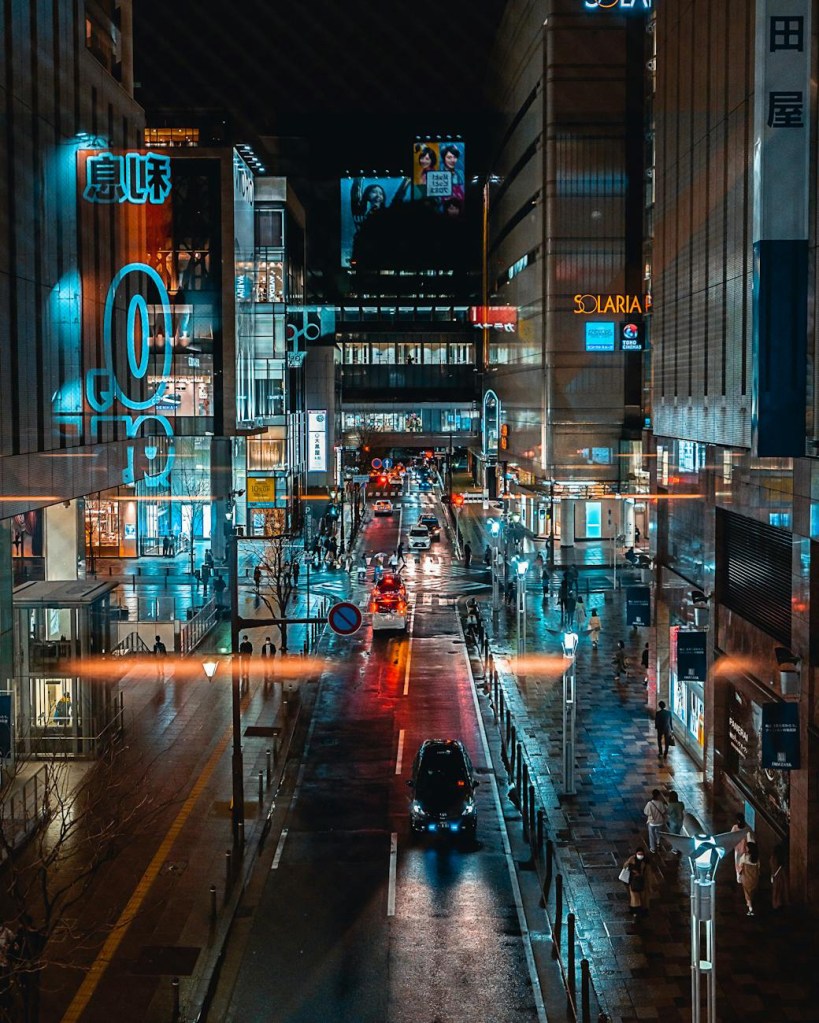
Imagine traveling with friends to attend a conference in a foreign land where you don’t speak the language. You approach the airline counter, ready to check in for your flight, only to be told that you’re missing a crucial document needed to leave the country. Your friends are already checked in and ready to board, while you are left stranded, staring at the departure gate in disbelief. This is exactly what happened to me in Fukuoka, Japan. I was at a loss when the airline representative asked for an authorization document I had mistakenly left back at my barracks. I watched helplessly as my friends waved goodbye, wishing me luck as they headed off to board the flight without me. A wave of stress hit me as I tried to figure out how to resolve my situation alone, in a place where I could barely communicate.
Traveling has always been a journey of discovery for me—whether it’s the thrill of exploring new places, the challenge of navigating unfamiliar environments, or the joy of learning something new about myself. But sometimes, these adventures don’t go as planned. Being unexpectedly stuck in Fukuoka without my travel documents was a moment that tested my courage, flexibility, and trust in the kindness of strangers.
The Unexpected Detour in Fukuoka
My friends and I were en route from Japan to Korea for a church conference. We were all set to board the same flight, but everything changed when I realized I had left my travel documents back on base. Without them, the airline wouldn’t let me board, and I was left to face the reality of navigating this situation on my own. My only option was to have my supervisors fax the document from my base, but that meant an overnight stay in Fukuoka and figuring out my next steps in a foreign city where I knew only a few Japanese words.
In moments like these, I’m reminded of Proverbs 3:5-6: “Trust in the Lord with all your heart and lean not on your own understanding; in all your ways submit to him, and he will make your paths straight.” With no immediate solution in sight, I had to decide: Do I sleep at the airport? Do I find a hotel? The language barrier added to the stress. While I could manage basic greetings, I couldn’t fully communicate my predicament or navigate the city easily. Thankfully, a kind customer service representative at the airport helped me reserve a hotel. However, the hotel wasn’t within walking distance—I had to take a train to get there.
Trusting the Kindness of Strangers
Following the directions given by the airport representative, I took the train, only to face another challenge: finding the hotel itself. With my limited Japanese, I stopped a passerby to ask for directions. He responded in rapid Japanese, which I couldn’t understand, but then he beckoned for me to follow him. At that moment, fear crept in. Here I was, alone in a foreign country, being led by a stranger. A mix of anxiety and hesitation filled me. Should I trust this person? But as Psalm 56:3 says, “When I am afraid, I put my trust in you.” With no other choice and a silent prayer in my heart, I followed him, hoping for the best.
To my immense relief, he led me directly to the hotel. His genuine kindness reminded me of the quote by Maya Angelou: “I’ve learned that people will forget what you said, people will forget what you did, but people will never forget how you made them feel.” That night, as I settled into my room, I felt a profound sense of gratitude for the stranger’s help and for being safely guided in unfamiliar territory.
A Morning of Renewed Hope
The next morning, I woke up early, determined to get back to the airport and see if my travel document had arrived. I retraced my steps, took the same train back, and approached the Korean Airlines counter with a mixture of hope and anxiety. To my relief, they had received the faxed document overnight. Not only was I finally able to board the flight to Korea, but I was also upgraded to first class—a small but meaningful blessing after the previous day’s stress and uncertainty.
The Power of Flexibility and Faith
This experience reminded me of the importance of being flexible and prepared for any situation. As Romans 8:28 reassures us, “And we know that in all things God works for the good of those who love him, who have been called according to his purpose.” While the ordeal was stressful, it reinforced my belief that challenges are opportunities for growth. I learned to trust my instincts, to be courageous in unfamiliar situations, and to have faith that things will work out—even when the path isn’t clear.
Helen Keller once said, “Life is either a daring adventure or nothing at all.” This experience taught me that each challenge, big or small, has the potential to teach us something valuable. As Eleanor Roosevelt noted, “Do one thing every day that scares you.” Stepping out of my comfort zone in Fukuoka taught me that even the scariest moments can lead to unexpected blessings.
Soul Insights
1. Be Prepared with Multiple Plans: Always have a Plan A, B, and C. Preparation isn’t about ensuring everything goes smoothly; it’s about being able to adapt when things don’t. Having backup plans—like carrying extra copies of documents or knowing emergency contacts—reduces stress and empowers you to tackle unexpected situations with confidence.
2. Trust, but Be Cautious: Trust is crucial when navigating unfamiliar environments, but it’s equally important to be discerning. My encounter with the kind stranger in Japan reminded me that there are good people everywhere willing to help, but it’s essential to stay alert and trust your instincts.
3. Courage Comes from Action: Courage isn’t about never feeling afraid; it’s about taking action despite the fear. Asking for help in a foreign language, navigating new streets, or deciding to follow a stranger—all of these required courage. Every step outside our comfort zone builds resilience and reinforces our ability to face the unknown.
4. Flexibility is Key: Plans can change in an instant, and flexibility allows you to adapt. Remaining open to alternative solutions, like finding a last-minute hotel or changing transportation plans, is crucial. Flexibility isn’t just about changing plans; it’s about maintaining a positive outlook amidst uncertainty.
5. Find Gratitude in Every Outcome: Even when things don’t go as planned, there’s always something to be thankful for—like the kindness of strangers, a safe place to rest, or an unexpected upgrade. Gratitude helps shift our focus from what went wrong to what went right, fostering resilience and a positive mindset.
Final Thoughts
Traveling is more than just visiting new places; it’s about discovering who we are when faced with the unexpected. My experience in Fukuoka taught me the value of preparation, flexibility, and trust. It reminded me that even in challenging situations, there is always room for growth and gratitude. Life’s adventures don’t always go as planned, but sometimes, those unplanned moments are where the greatest lessons are learned. Have you ever faced an unexpected challenge while traveling? How did you handle it? Share your story in the comments—I’d love to hear how others have navigated the unknown!
© 2024 Amelie Chambord

 Soul Path Insights
Leave a comment